Renal Nutrition
Plant-Based Protein for CKD: How Much Is Safe and How to Get Enough
For forty years, renal nutrition boiled down to one sentence: eat less protein, avoid high-potassium plants. The 2020 KDOQI update rewrote that script [1].
The new guideline endorses plant-dominant patterns at 0.55–0.60 g of protein per kg of body weight per day for non-dialysis CKD stages 3–5 — because the source of the protein, not just the dose, drives acid load, phosphorus exposure, and gut-derived uremic toxins. In 2023, the PLADO framework formalized the target: at least half of protein from plants, 0.6–0.8 g/kg/day, ≥25 g fiber, and sodium under 3 g [2].
This is one of the few areas of CKD nutrition where mechanism, observational data, RCTs, and guideline consensus all point the same way. The remaining work is execution — hitting your protein target without spiking potassium, and adjusting to labs rather than dogma.
Why plant protein is friendlier to the CKD kidney
Lower acid load on the kidney
Animal-heavy diets generate 50–100 mEq/day of fixed acid; plant-dominant patterns are net-neutral or alkaline, which slows eGFR decline and reduces the need for sodium bicarbonate [3].
Phosphorus barely enters the bloodstream
Plant phosphorus is 30–50% absorbed (most is locked in phytate humans can't digest) vs 40–60% from animal protein and 90–100% from phosphate additives in processed food [4].
Fiber feeds friendly gut bacteria
Suppresses proteolytic species and lowers indoxyl sulfate and p-cresyl sulfate — uremic toxins independently linked to cardiovascular death in CKD [5].
More magnesium, potassium precursors, polyphenols
Supports endothelial function — and cardiovascular disease, not dialysis, is still the leading cause of death in CKD.
Better long-term kidney outcomes
PLADO-style eating in the CRIC cohort was associated with 26% lower all-cause mortality and slower eGFR decline over 7 years [6].
The best plant proteins for CKD, ranked by protein density
| Food | Protein (g) | Potassium (mg) | Phosphorus (mg) | Notes |
|---|---|---|---|---|
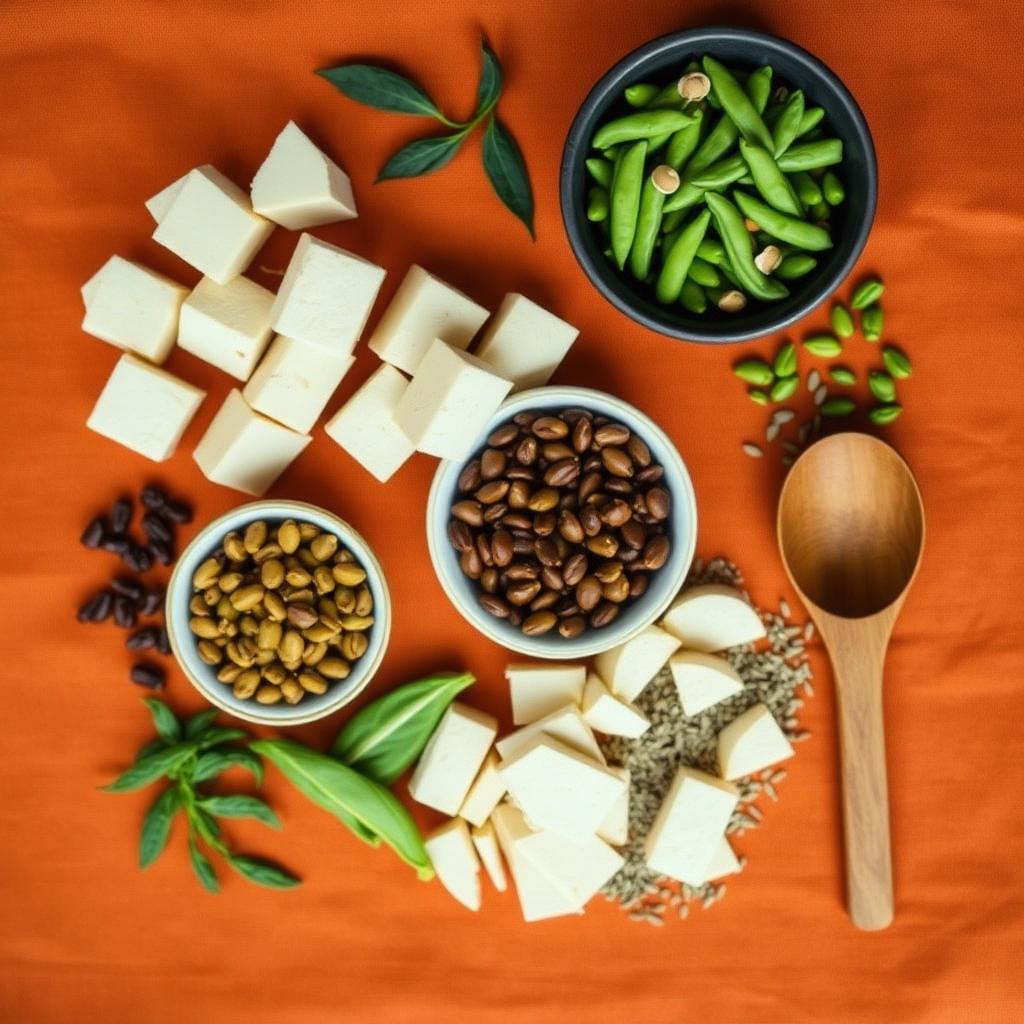
| Seitan, 3 oz | 25 | 60 | 60 | Best protein-to-K ratio; not gluten-free |
| Firm tofu, ½ cup | 22 | 150 | 180 | Calcium-set tofu adds calcium; great workhorse |
| Tempeh, ½ cup | 17 | 342 | 266 | Fermented — slightly higher P bioavailability than tofu |
| Edamame, 1 cup | 17 | 676 | 262 | High K — portion-control in stage 4–5 |
| Lentils, 1 cup cooked | 18 | 731 | 356 | Soak + drain to drop K ~20–30% |
| Black beans, 1 cup | 15 | 611 | 241 | Rinse canned beans → ~40% sodium reduction |
| Hemp seeds, 3 tbsp | 10 | 360 | 495 | P is largely phytate-bound — bioavailability ~40% |
| Greek yogurt, ¾ cup (animal ref) | 17 | 240 | 240 | Included as a comparison; ~70% P bioavailability |
Portion math for stage 3–4 CKD: a worked example
Take a 70-kg adult with eGFR 35, potassium 4.4, phosphorus 4.0, bicarbonate 22. The KDOQI target is 0.6 g/kg/day (= 42 g). The PLADO upper bound is 0.8 g/kg (= 56 g). Here is one workable plant-dominant day laid out meal by meal.
Potassium watchouts when transitioning
The most common reason a plant-dominant CKD diet 'fails' is a one-time potassium spike during transition — not a sustained problem. Three specific techniques meaningfully lower the potassium load of plant foods without abandoning them.
Soak and double-boil legumes
Soak 8 hours, discard water, boil 10 minutes, discard, boil again. Drops potassium by 30–50%.
Cube and leach potatoes
Soak diced cubes in cold water for 2–4 hours, then boil. Drops potassium by roughly 50%.
One high-K food per meal
Don't stack avocado, beans, tomato, and potato in the same dish. Cap it at one.
Recheck at 4–6 weeks
If serum potassium creeps above 5.0, scale back to a 50/50 plant-animal pattern rather than abandoning the strategy [7].
What about the protein-quality argument?
The historical objection to plant protein in CKD was lower digestibility (DIAAS) and lower leucine content. In practice that gap is bridged three ways: (a) eat roughly 10–15% more total plant protein to match animal-equivalent essential amino acid delivery, (b) combine grains and legumes across the day (not necessarily within a single meal), and (c) lean on soy — tofu, tempeh, soy milk — which has the highest DIAAS of any plant source and is essentially equivalent to dairy [8]. For sarcopenia-prone older CKD adults, adding 1–2 servings/day of soy or a hydrolyzed pea protein is reasonable and well within guideline guidance.
Special cases
The PLADO framework is the default, but four patient groups run a specifically different playbook. Match yourself to the closest card and bring it to your next appointment.
Diabetic CKD
Legumes have the additional advantage of lowering postprandial glucose — the DASH and Mediterranean overlap is strongest here. Split protein evenly across meals to protect against post-meal glucose spikes.
Nephrotic syndrome
Moderate (not high) protein at 0.8 g/kg, plant-dominant, with sodium <2 g. Statin therapy per cardiology; watch for hypoalbuminemia-driven edema.
On dialysis
Protein need flips upward to 1.0–1.2 g/kg/day. Plant protein is still preferred for phosphorus load — but hitting the total dose is now the priority, so add soy, seitan, and a plant-based protein shake if intake falls short.
Kidney transplant
Plant-dominant remains protective long-term. Watch tacrolimus interactions — avoid grapefruit and pomegranate, and coordinate any high-vitamin-K greens with your INR if you're also on warfarin.
Related reading on NephroNourish
Renal Nutrition
Low-Phosphorus Diet for CKD: A Nutrition Researcher's Guide to Hidden Phosphate Additives
Why plant phosphorus is the least worrying kind — and how to spot the additives that actually raise your serum phosphate.
Read the article →Kidney-Friendly Recipes
7-Day Kidney-Friendly Meal Plan for Stage 3 CKD (With Grocery List)
A worked week of PLADO-style meals with grocery list and portion math.
Read the article →Renal Nutrition
Potassium and Kidney Disease: Foods to Limit and Foods That Are Actually Safe
The parallel guide for potassium — use it if labs shift as you transition to plants.
Read the article →Renal Nutrition
Protein Needs in Dialysis vs Pre-Dialysis CKD
How the protein target changes once dialysis starts — and how to hit it with plants.
Read the article →References
- 1.Ikizler TA, et al. KDOQI Clinical Practice Guideline for Nutrition in CKD: 2020 Update. AJKD 2020;76(3 Suppl 1):S1–S107. Read source ↗
- 2.Kalantar-Zadeh K, et al. Plant-Dominant Low-Protein Diet for Conservative Management of CKD. Nutrients 2020;12(7):1931. Read source ↗
- 3.Goraya N, et al. Dietary acid reduction with fruits and vegetables or bicarbonate attenuates kidney injury in patients with a moderately reduced glomerular filtration rate due to hypertensive nephropathy. Kidney Int 2012;81(1):86–93. Read source ↗
- 4.Moe SM, et al. Vegetarian compared with meat dietary protein source and phosphorus homeostasis in CKD. CJASN 2011;6(2):257–264. Read source ↗
- 5.Wu IW, et al. p-Cresyl sulphate and indoxyl sulphate predict progression of CKD. NDT 2011;26(3):938–947. Read source ↗
- 6.Kim H, et al. Plant-Based Diets and Incident CKD and Kidney Function. CJASN 2019;14(5):682–691. Read source ↗
- 7.Cupisti A, et al. Nutritional treatment of advanced CKD: twenty consensus statements. J Nephrol 2018;31(4):457–473. Read source ↗
- 8.Mathai JK, et al. DIAAS values for selected protein sources. Br J Nutr 2017;117(4):490–499. Read source ↗
About the author
Swetha Raju
Columbia M.S. Candidate in Clinical Human Nutrition · AKF Certified Kidney Health Coach · NKF Medical Advisory Committee (MAC) Member · NKF peer mentor · CKD patient advocate · Published chronic disease and nutrition researcher
Swetha Raju is the founder of NephroNourish. As a published researcher and lifelong chronic disease patient, she translates renal nutrition and metabolic science into practical guidance people can actually use.
A note on scope. This article is educational and not individual medical advice. Always discuss changes with your nephrologist, dietitian, or care team.