Renal Nutrition
Anemia in CKD: Iron-Rich Foods That Won't Spike Potassium
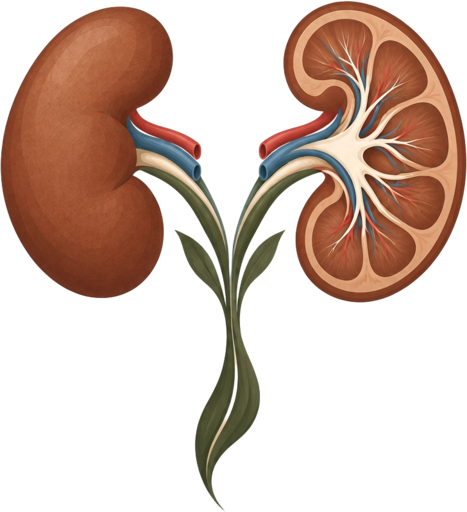
By stage 3b CKD, more than half of patients meet criteria for anemia — hemoglobin under 13 g/dL in men, under 12 g/dL in women [1]. Two mechanisms converge to cause it, and understanding both is what makes the food strategy make sense.
1 · EPO shortage
The failing renal cortex makes less erythropoietin, the hormone that tells bone marrow to build red cells. Fewer signals → fewer new red cells → falling hemoglobin, even when iron and B12 are perfectly stocked.
2 · Hepcidin lock
Chronic inflammation and uremia keep liver hepcidin elevated. Hepcidin blocks iron release from gut cells and macrophages — so total-body iron can look normal on labs while marrow is starved.
Heme vs non-heme iron — why the difference matters in CKD
Iron enters the body through two completely separate doors, and CKD affects them very differently. Getting this right is the single biggest lever in a food-first strategy.
| Feature | Heme iron | Non-heme iron |
|---|---|---|
| Food sources | Beef, poultry, fish, shellfish, eggs (partly) | Beans, lentils, tofu, spinach, fortified grains |
| Transporter | HCP1 | DMT1 |
| Typical absorption | 15–35% | 2–20% |
| Absorption in inflamed CKD | Largely preserved | Often <5% |
| Influenced by vitamin C, phytates, tea/coffee | Minimally | Strongly (up 2–3×, down 40–80%) |
| Influenced by iron stores / hepcidin | Minimally | Strongly down-regulated |
| Best used for | Reliable daily iron in CKD | Diversifying diet; needs pairing strategy |
| Source | Iron (mg) | Type | Potassium (mg) | Phosphorus (mg) |
|---|---|---|---|---|
| Lean beef sirloin, 3 oz | 2.5 | Heme | 240 | 180 |
| Beef liver, 3 oz | 5.0 | Heme | 300 | 405 |
| Chicken thigh, 3 oz | 1.3 | Heme | 220 | 150 |
| Turkey, dark meat, 3 oz | 2.0 | Heme | 275 | 175 |
| Sardines (canned in water), 3 oz | 2.5 | Heme | 365 | 417 |
| Oysters, 3 oz | 5.7 | Heme | 200 | 135 |
| Egg, 1 large | 1.0 | Mixed | 63 | 86 |
| Lentils, 1/2 cup cooked | 3.3 | Non-heme | 365 | 178 |
| Spinach, 1/2 cup cooked | 3.2 | Non-heme | 420 | 50 |
| White beans, 1/2 cup | 3.3 | Non-heme | 500 | 150 |
| Tofu, firm, 1/2 cup | 3.4 | Non-heme | 150 | 175 |
| Pumpkin seeds, 1 oz | 2.5 | Non-heme | 230 | 330 |
| Fortified Cream of Wheat, 1/2 cup cooked | 5.0 | Non-heme | 30 | 20 |
| Fortified iron cereal (Total), 1 cup | 18.0 | Non-heme | 55 | 20 |
The CKD-friendly winners — high iron, low potassium
Not every iron-rich food fits a CKD plate. The shortlist below hits the sweet spot: enough iron to move labs, low enough potassium and phosphorus to stay inside stage 3–4 targets, and portions most people will actually eat.
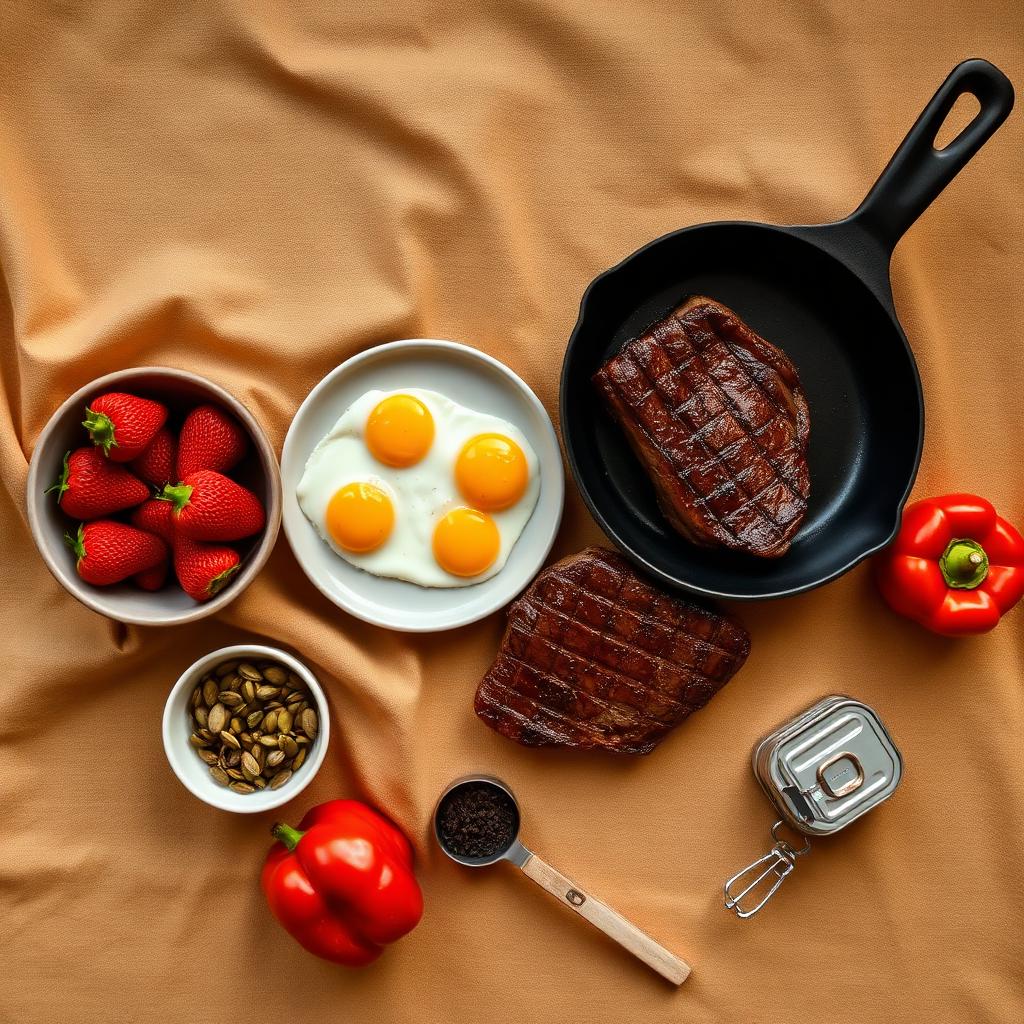
Lean beef, chicken thigh, turkey thigh
Heme iron at modest potassium per portion. The everyday backbone.
Oysters and sardines
Extremely high heme iron per ounce; portion sardines carefully for phosphorus.
Eggs
The single best low-potassium iron source for protein-restricted patients.
Fortified low-potassium hot cereals
Cream of Wheat and similar hot cereals. Non-heme but very high per serving — pair with vitamin C.
Beef liver (1× per 2 weeks)
Extraordinary iron and B12 density; keep portions small for vitamin A and phosphorus.
Pair with vitamin C — and separate from binders, coffee, and tea
Vitamin C reduces ferric (Fe³⁺) iron to the absorbable ferrous (Fe²⁺) form and holds it in soluble chelates, tripling non-heme absorption when eaten in the same meal [3]. On the other side, polyphenols in coffee and tea (chlorogenic acid, tannins) and calcium in dairy or binders can cut non-heme absorption 40–80%. The rule is simple: build a helper into every meal, push the blockers to a different hour.
Add a vitamin C food
Half a red bell pepper, a cup of strawberries, or a side of cooked broccoli at the same meal as any non-heme iron source.
Move coffee and tea
Push them 60+ minutes away from iron-rich meals. This one change can matter more than switching iron pills.
Space calcium sources
Dairy, calcium supplements, and calcium-based binders (calcium acetate, calcium carbonate) all compete with iron at DMT1. Keep them 2 hours apart.
Critical drug–food timing
| Combination | Spacing | Why |
|---|---|---|
| Oral iron + phosphate binder | 2 hours | Calcium, sevelamer, and lanthanum chelate iron in the gut [4] |
| Oral iron + levothyroxine | 4 hours | Iron blocks levothyroxine absorption ~30% |
| Oral iron + PPI (omeprazole, pantoprazole) | Take iron with vitamin C | Acid suppression reduces ferric reduction |
| Oral iron + coffee/tea | 1+ hour | Polyphenols form insoluble iron-polyphenol complexes |
| Oral iron + calcium supplement | 2 hours | Direct competition at DMT1 |
| Oral iron + dairy | 2 hours | Calcium effect |
| Ferric citrate (Auryxia) | With meals | Acts as both binder and iron source — same dose |
Iron preparations — pros, cons, and tolerability
Ferrous sulfate is cheap, effective, and — for many people — nearly unusable because of GI side effects. Roughly half of patients started on it quit within 3 months, most often because of nausea, constipation, or metallic aftertaste. Before writing off oral iron entirely, it's worth cycling through the tolerability ladder below with your prescriber.
Start · Ferrous bisglycinate
Chelated form with the best GI tolerability profile. 25–28 mg elemental per pill. Often the first switch when sulfate fails.
Escalate · Heme iron polypeptide
Proferrin and similar. Absorbed via HCP1 like food heme iron, so it bypasses most drug-food interactions and hepcidin gating.
Dual-purpose · Ferric citrate
Auryxia acts as both phosphate binder and iron source. In CKD trials it raises ferritin and TSAT — a genuine two-for-one.
Bypass gut · IV iron
Sucrose, ferumoxytol, or ferric derisomaltose. Standard on dialysis; increasingly used in non-dialysis CKD when oral fails or is malabsorbed.
| Form | Elemental iron / pill | Notes |
|---|---|---|
| Ferrous sulfate 325 mg | 65 mg | Cheap, effective, worst GI tolerability |
| Ferrous gluconate 240 mg | 27 mg | Better tolerated, lower dose per pill |
| Ferrous bisglycinate | 25–28 mg | Best GI tolerability; often better adherence |
| Heme iron polypeptide (Proferrin) | 11 mg heme | Absorbed via HCP1; bypasses many interactions |
| Ferric citrate (Auryxia) | — | Binder + iron source; raises ferritin/TSAT in CKD trials |
| IV iron sucrose / ferumoxytol / ferric derisomaltose | 100–1000 mg/infusion | Bypasses gut entirely; standard on dialysis |
Alternate-day dosing: less may be more
Acute oral iron raises hepcidin for 24+ hours, which blocks absorption of the next dose. Trials in iron-deficient women show that alternate-day dosing (e.g., 60–120 mg every other day) achieves equal or greater fractional iron absorption with substantially less GI side effect burden compared with daily or twice-daily dosing [5]. For CKD patients struggling with constipation, nausea, or dark stools, ask your nephrologist whether alternate-day dosing is appropriate before quitting.
What labs actually mean
| Lab | Definition | Target (CKD non-dialysis) |
|---|---|---|
| Hemoglobin (men) | Oxygen-carrying protein in red cells | ≥13 g/dL |
| Hemoglobin (women) | — | ≥12 g/dL |
| TSAT (transferrin saturation) | Iron in transit / total transferrin | ≥20%, often target 25–35% |
| Ferritin | Iron storage protein (also acute phase reactant) | ≥100 ng/mL non-dialysis; ≥200 dialysis |
| Reticulocyte count | Young red cells — measures marrow response | Increases after effective iron repletion |
When food isn't enough
If TSAT <20% or ferritin is below the targets above, KDIGO 2012 recommends a 1–3 month trial of oral iron in non-dialysis CKD, with IV iron as second-line; on dialysis, IV iron is first-line because hepcidin-driven gut malabsorption makes oral dosing inefficient [1]. ESAs (epoetin alfa, darbepoetin, daprodustat) are added once iron stores are repleted and hemoglobin remains <10 g/dL. The order matters: starting an ESA without first replenishing iron drives functional iron deficiency, raises ESA dose requirements, and is associated with worse outcomes [6].
A one-day iron-friendly plan for CKD stage 3b–4
Breakfast
Two scrambled eggs, 1 cup strawberries, ½ cup fortified Cream of Wheat. Non-heme iron paired with strong vitamin C.
Morning snack
1 oz pumpkin seeds. Portion tightly to keep phosphorus in range.
Lunch
3 oz grilled chicken thigh, roasted red bell peppers, side salad with lemon vinaigrette.
Afternoon snack
4 oz unsweetened Greek yogurt with a small handful of strawberries.
Dinner
3 oz lean sirloin or sardines, double-boiled potato, cucumber salad.
Beverages & binder timing
Water and sparkling water with lemon. Coffee and tea 1+ hour from meals. Binder with the first bite of each meal; iron pill (if prescribed) 2 hours away from binders.
References
- 1.KDIGO Clinical Practice Guideline for Anemia in CKD. Kidney Int Suppl 2012;2:279-335. Read source ↗
- 2.Babitt JL, Lin HY. Mechanisms of anemia in CKD. JASN 2012;23(10):1631-4. Read source ↗
- 3.Hurrell R, Egli I. Iron bioavailability and dietary reference values. Am J Clin Nutr 2010;91(5):1461S-1467S. Read source ↗
- 4.Pruchnicki MC, et al. Effect of phosphate binders on supplemental iron absorption in healthy subjects. J Clin Pharmacol 2002;42(10):1171-6. Read source ↗
- 5.Stoffel NU, et al. Iron absorption from oral iron supplements given on consecutive versus alternate days. Lancet Haematol 2017;4(11):e524-e533. Read source ↗
- 6.Kliger AS, et al. KDOQI US commentary on the 2012 KDIGO Clinical Practice Guideline for Anemia in CKD. AJKD 2013;62(5):849-859. Read source ↗
About the author
Swetha Raju
Columbia M.S. Candidate in Clinical Human Nutrition · AKF Certified Kidney Health Coach · NKF Medical Advisory Committee (MAC) Member · NKF peer mentor · CKD patient advocate · Published chronic disease and nutrition researcher
Swetha Raju is the founder of NephroNourish. As a published researcher and lifelong chronic disease patient, she translates renal nutrition and metabolic science into practical guidance people can actually use.
A note on scope. This article is educational and not individual medical advice. Always discuss changes with your nephrologist, dietitian, or care team.