Autoimmune Nutrition
The Autoimmune Protocol (AIP) Diet: What the Evidence Actually Says
The autoimmune protocol (AIP) is a structured elimination diet developed within the paleo community in the early 2010s and now used widely — and often unsupervised — by people with Hashimoto's, IBD, lupus, rheumatoid arthritis, psoriasis, and unexplained 'inflammation.' It removes a long list of foods believed to trigger immune dysregulation in susceptible people, then systematically reintroduces them to identify personal triggers. It is restrictive, polarizing, and surprisingly under-studied. The small body of human evidence we do have is more interesting than most clinicians realize and less conclusive than most influencers claim.
Here is the mechanistic rationale, every published human trial of the protocol, what AIP plausibly does and does not do, who should not try it, and how to run a reintroduction phase that actually earns its restriction.
The mechanistic rationale
AIP rests on three overlapping hypotheses about how the modern Western diet may amplify autoimmune activity in genetically susceptible people. None are settled science; all have mechanistic support in the literature.
Leaky-gut hypothesis
Certain foods increase intestinal permeability and let incompletely digested proteins interact with mucosal immunity, driving systemic inflammation [1].
Molecular mimicry
Structural overlap between dietary proteins and self-tissues — for example gliadin and thyroid peroxidase — may amplify autoimmune signaling in susceptible people [2].
Microbiome dysbiosis
The Western pattern shifts gut communities toward pro-inflammatory species, and dysbiosis is now consistently observed in IBD, RA, and lupus [3].
What AIP eliminates and what it emphasizes
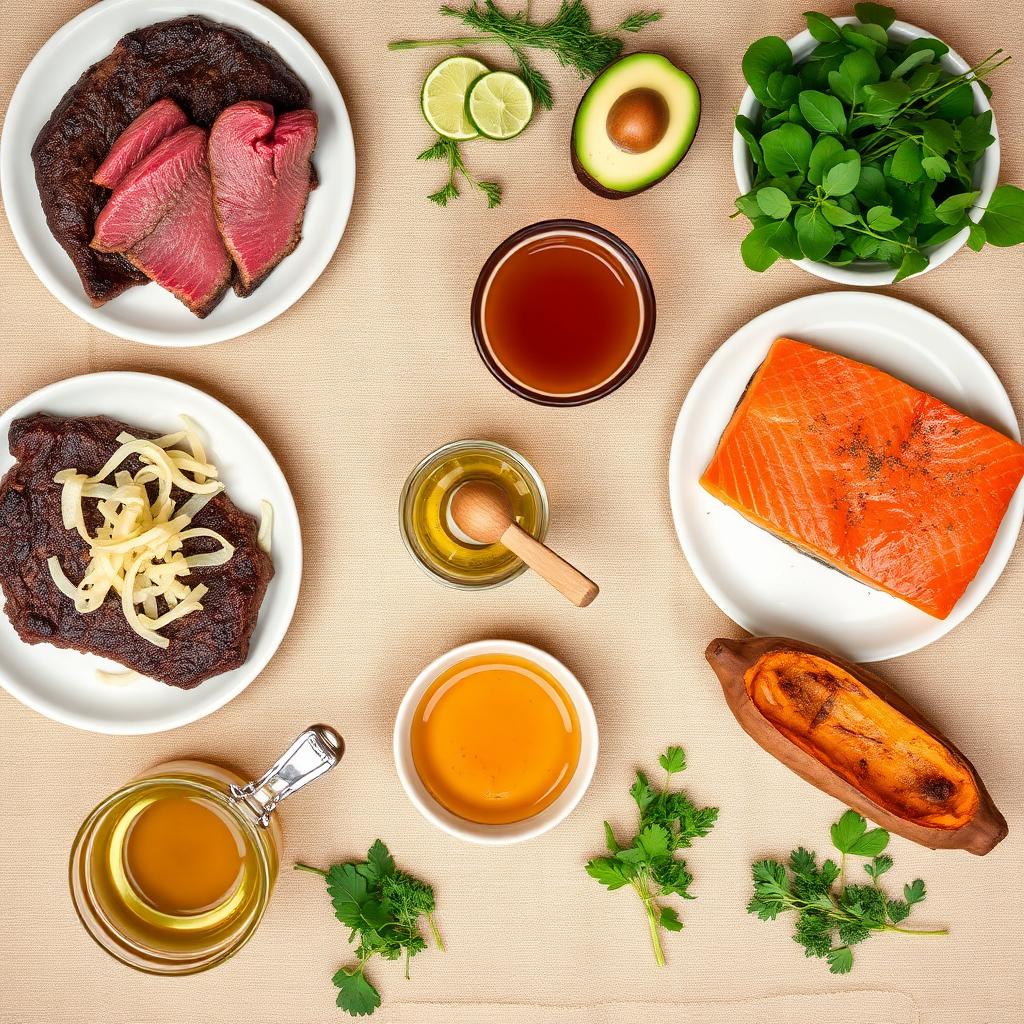
| Eliminated | Emphasized |
|---|---|
| Grains (all, including rice, oats, corn) | Vegetables (non-nightshade) |
| Legumes (beans, lentils, peanuts, soy) | Fruit in moderation (berries preferred) |
| Dairy (all) | High-quality animal protein, including organ meats |
| Eggs | Fatty fish and seafood (≥3×/wk) |
| Nuts and seeds | Bone broth (collagen, glycine) |
| Nightshades (tomato, potato, pepper, eggplant) | Fermented foods (sauerkraut, kombucha) |
| Refined sugar, honey limited | Olive oil, avocado, coconut oil |
| Alcohol, coffee | Herbs (most), green/herbal tea |
| Processed seed oils (soy, corn, canola) | Sea salt, gelatin |
| Food additives (emulsifiers, gums, dyes) | Spices excluding nightshade-derived |
What the human research actually shows
| Trial | Condition (n) | Protocol | Outcome |
|---|---|---|---|
| Konijeti 2017 [4] | IBD (15) | 6 wk transition + 5 wk maintenance | 73% clinical remission by wk 6; mucosal improvement on endoscopy |
| Abbott 2019 [5] | Hashimoto's (16 women) | 10 wk AIP + lifestyle | ↑ QoL, ↓ hs-CRP; no change in thyroid antibodies in 10 wk |
| Chandrasekaran 2019 [6] | Crohn's (9, open-label) | 11 wk | ↓ fecal calprotectin; clinical improvement |
| Konijeti 2024 (in progress) | IBD | RCT (ongoing) | Awaited |
What the data supports: AIP appears feasible for motivated patients, can produce meaningful symptom improvement in IBD over 6–12 weeks, can improve QoL and lower hs-CRP in Hashimoto's, and is associated with reductions in inflammatory markers across the conditions studied. What the data does not yet support: that AIP outperforms a Mediterranean or whole-food anti-inflammatory pattern [7], that it changes long-term disease trajectory, that it produces sustained antibody reductions in autoimmune thyroid disease, or that it can replace disease-modifying medication in active flares.
How to run a structured AIP trial — if you're going to
The diet only earns its restriction if it is genuinely time-limited and followed by a careful reintroduction phase. A protocol that drifts into months of indefinite elimination loses the diagnostic value and adds nutrient-deficiency, social, and disordered-eating risks [8].
Pick a window
Most clinicians use 30 days minimum. IBD trials used 6 weeks; the Hashimoto's trial used 10.
Plan the menu first
Rotate 8–10 recipes you actually enjoy. Novelty burnout is the #1 reason people quit.
Eat enough
Front-load calories and protein. Under-eating drives the 'I feel worse on AIP' complaint.
Hydrate + electrolytes
Sodium losses are common. Add a pinch of salt to meals; sip electrolytes if energy dips or headaches show up.
Symptom journal
Daily 0–10 scales for fatigue, joint pain, GI, mood, and sleep. Memory will lie to you here.
Start with low-risk foods
Egg yolks, ghee, seed-based spices, and nuts are the usual first reintroductions.
Three days, three portions
Day 1: small portion. Day 2: normal portion. Day 3: larger portion. Then wait 72 hours symptom-free before the next food.
Know the reaction window
GI symptoms in hours; joint or skin symptoms in 24–72 hours; mood and fatigue often within a day.
Pull and retry
A reaction warrants pulling that food and re-trying in 4–8 weeks. Persistent reaction = genuine intolerance.
Land on a maintenance diet
Most people add back 70–90% of eliminated foods. That personalized 'no' list is the goal — not lifelong restriction.
Where AIP can go wrong
Long-term restriction without reintroduction
Risks nutrient gaps — calcium (no dairy), fiber (no legumes/grains), iodine (no iodized salt or dairy), B vitamins (no fortified grains) — and a strained relationship with food [8].
Dropping fiber and losing microbial diversity
Removing legumes and whole grains lowers fiber intake and reduces microbial diversity unless replaced aggressively by vegetables and fermented foods [3].
Running it in the wrong life stage
Not appropriate during pregnancy (unproven safety, increased nutrient needs), in eating-disorder history (restriction triggers relapse), or in significant kidney disease without supervision (high protein and oxalate loads).
Underestimating the cost + time burden
Animal-protein and produce-heavy eating is not cheap, and phase 1 requires near-total home cooking.
Letting it become identity
Patients sometimes stay on it indefinitely despite no clear benefit, missing other interventions that would help more.
Who should not try AIP without supervision
Match yourself to the closest card. If any apply, work with a rheumatologist, gastroenterologist, or specialist dietitian before starting — not after something goes wrong.
Eating disorder history
Any restrictive-eating history — anorexia, orthorexia, ARFID — makes an elimination diet high-risk for relapse. AIP's rigid rules can look like recovery but function like relapse. This is a hard no without an eating-disorder-informed clinician on board.
Pregnancy or breastfeeding
Nutrient needs are higher, and safety data for AIP in these windows is essentially nonexistent. Continue an anti-inflammatory whole-food pattern instead — don't start a new elimination protocol.
Type 1 diabetes
Cutting entire carb groups shifts insulin needs day-to-day and raises hypoglycemia risk. If you and your endocrinologist agree it's worth trying, tighten CGM review and be ready to adjust basal and bolus doses at every phase transition.
Advanced CKD or transplant
The high animal-protein, high-oxalate emphasis (bone broth, leafy greens, nuts on reintroduction) can worsen phosphorus, acid load, and oxalate exposure. Get a renal dietitian to individualize — a standard AIP list is not renal-safe.
Active flare on biologics
Don't run an experiment during an active flare. Wait until your rheumatology team has you stable, then trial AIP as an adjunct — never as a replacement for disease-modifying therapy.
Tracking reintroductions so the work actually pays off
The elimination phase only earns its restriction if the reintroduction phase is rigorous. Add one food group at a time, watch for 2–3 days, increase to a normal serving, then track symptoms for a full 72 hours before introducing the next food. A simple journal (food, time, symptoms, severity 0–10) makes patterns visible that memory will miss. Many patients are surprised to find that the foods they were most worried about cause no reaction, and that one or two unexpected items (often dairy or nightshades for autoimmune thyroid; gluten or eggs for IBD) are the actual triggers.
How AIP compares to other anti-inflammatory patterns
| Pattern | Evidence base | Restriction | Best fit |
|---|---|---|---|
| Mediterranean | Largest (PREDIMED [7], dozens of RCTs) | Low | First-line for almost everyone |
| DASH | Strong for BP, CV, hs-CRP | Low–moderate | Hypertension, CKD, metabolic syndrome |
| AIP | Small RCTs in IBD, Hashimoto's | Very high | Trial when standard patterns fail; diagnostic elimination |
| Specific Carbohydrate Diet (SCD) | Pediatric IBD evidence [9] | High | IBD-specific alternative to AIP |
What this is not
AIP is not a validated treatment for cancer, thyroid replacement, or active flares requiring immunosuppression — it's an adjunct that may reduce symptom burden and identify individual triggers. Stay on disease-modifying medication unless your specialist directs otherwise. The mechanistic story is interesting, the small trials are encouraging, and the diagnostic value of a structured elimination can be real — but it is not a cure, not a forever diet, and not a substitute for the standard of care for your specific condition.
Related reading on NephroNourish
Autoimmune & Renal
Lupus Nephritis Diet: Protein, Salt, and Medication Interactions
The kidney-specific playbook for autoimmune disease — protein, sodium, and how diet interacts with steroids and MMF.
Read the article →Renal Nutrition
Plant-Based Protein for CKD: How Much Is Safe and How to Get Enough
If AIP's animal-protein emphasis clashes with a CKD diagnosis, this is the reconciling framework.
Read the article →References
- 1.Fasano A. Zonulin and its regulation of intestinal barrier function: the biological door to inflammation, autoimmunity, and cancer. Physiol Rev 2011;91(1):151–175. Read source ↗
- 2.Cusick MF, Libbey JE, Fujinami RS. Molecular mimicry as a mechanism of autoimmune disease. Clin Rev Allergy Immunol 2012;42(1):102–111. Read source ↗
- 3.Belkaid Y, Hand TW. Role of the microbiota in immunity and inflammation. Cell 2014;157(1):121–141. Read source ↗
- 4.Konijeti GG, et al. Efficacy of the autoimmune protocol diet for inflammatory bowel disease. Inflamm Bowel Dis 2017;23(11):2054–2060. Read source ↗
- 5.Abbott RD, et al. Efficacy of the autoimmune protocol diet as part of a multidisciplinary, supported lifestyle intervention for Hashimoto's thyroiditis. Cureus 2019;11(4):e4556. Read source ↗
- 6.Chandrasekaran A, et al. The autoimmune protocol diet modifies intestinal RNA expression in inflammatory bowel disease. Crohn's Colitis 360 2019;1(3):otz016. Read source ↗
- 7.Estruch R, et al. Primary Prevention of CVD with a Mediterranean Diet (PREDIMED). NEJM 2018;378:e34. Read source ↗
- 8.StatPearls. Elimination diets. NCBI Bookshelf. Read source ↗
- 9.Suskind DL, et al. Clinical and fecal microbial changes with diet therapy in active inflammatory bowel disease. J Clin Gastroenterol 2016. Read source ↗
About the author
Swetha Raju
Columbia M.S. Candidate in Clinical Human Nutrition · AKF Certified Kidney Health Coach · NKF Medical Advisory Committee (MAC) Member · NKF peer mentor · CKD patient advocate · Published chronic disease and nutrition researcher
Swetha Raju is the founder of NephroNourish. As a published researcher and lifelong chronic disease patient, she translates renal nutrition and metabolic science into practical guidance people can actually use.
A note on scope. This article is educational and not individual medical advice. Always discuss changes with your nephrologist, dietitian, or care team.