Renal Nutrition
Cardiovascular-Kidney-Metabolic Syndrome: What to Eat
The American Heart Association's 2023 Presidential Advisory on Cardiovascular-Kidney-Metabolic (CKM) Syndrome [1] reframes obesity, type 2 diabetes, chronic kidney disease, and atherosclerotic cardiovascular disease as a single biological continuum driven by visceral adiposity, insulin resistance, neurohormonal activation, and oxidative stress. Roughly 90% of US adults meet criteria for at least CKM stage 1, and ~15% are stage 3 or 4 [1]. The clinical implication is striking: a single dietary pattern can move all four risk axes simultaneously.
The four CKM stages at a glance
CKM is deliberately staged, not diagnosed as a yes/no. The AHA framework tracks how far along the shared continuum you are — from purely metabolic risk to overt cardiovascular events — so the diet, medications, and monitoring can scale with you rather than waiting for the first heart attack or the first dialysis conversation [1]. The stages are not a ladder you inevitably climb: earlier intervention consistently pulls people back down.
Stage 0 · Prevent
No CKM risk factors. Mediterranean-leaning baseline, protect sleep, keep moving. This is where diet does the most work per calorie.
Stage 1 · Adiposity
Excess or dysfunctional adiposity without other metabolic changes yet. Cut ultra-processed food, add 10+ g fiber, tighten sleep and alcohol.
Stage 2 · Metabolic
Hypertension, hyperglycemia, dyslipidemia, or moderate-high risk CKD. DASH pattern, sodium under 2,300 mg, soluble fiber 10–15 g.
Stage 3 · Subclinical
Subclinical CVD, or high-risk CKD (eGFR <45 or persistent albuminuria). Add plant-forward protein at 0.6–0.8 g/kg if CKD stage 3b–4.
Stage 4 · Clinical CVD
Overt cardiovascular disease on the CKM background. Mediterranean pattern plus cardiac rehab nutrition and medication optimization.
The four CKM-friendly anchors
There is no shortage of "heart-healthy" or "kidney-friendly" food lists. What makes the CKM framework practical is that four levers — sodium, protein source, soluble fiber, and Mediterranean fats — do most of the work across all four organ systems. Everything else is refinement.
Sodium under 2,300 mg/day
1,500 mg if hypertensive. Each 1 g/day reduction lowers systolic BP ~2 mmHg [2]. Highest-leverage single lever.
Plant-forward protein
0.6–0.8 g/kg/day in CKD stages 3b–4; 1.0–1.2 g/kg without CKD [3]. Half or more from plants when possible.
Soluble fiber 10–15 g/day
Oats, psyllium, beans, apples, barley. Lowers LDL ~5–10% and blunts postprandial glucose [4].
Mediterranean fats
Extra-virgin olive oil as primary fat, fatty fish 2×/week, a small handful of nuts daily. PREDIMED cut major cardiovascular events ~30% [5].
What to limit — and why
The "limit" list is short on purpose. These four categories account for most of the excess sodium, phosphorus load, and refined-carbohydrate burden in a typical Western pattern — and each has a mechanism directly relevant to CKM biology, not just calorie count.
Phosphate additives (any 'PHOS' on the label)
90–100% bioavailable versus 40–60% for natural phosphorus; linked to vascular calcification and mortality in CKD [6].
Sugar-sweetened beverages
Independently associated with CKD progression in NHANES and the Nurses' Health Study [7]. Water, sparkling water, and unsweetened tea are the swap.
Processed red meat
Each 50 g/day raises coronary heart disease risk ~42% and CKD incidence ~22% [8]. Fresh red meat is not the same food as bacon, deli, or hot dogs.
Refined carbohydrates with low fiber
White bread, pastries, most breakfast cereals. Drive postprandial glucose excursions that accelerate endothelial dysfunction.
One CKM-aligned day, meal by meal
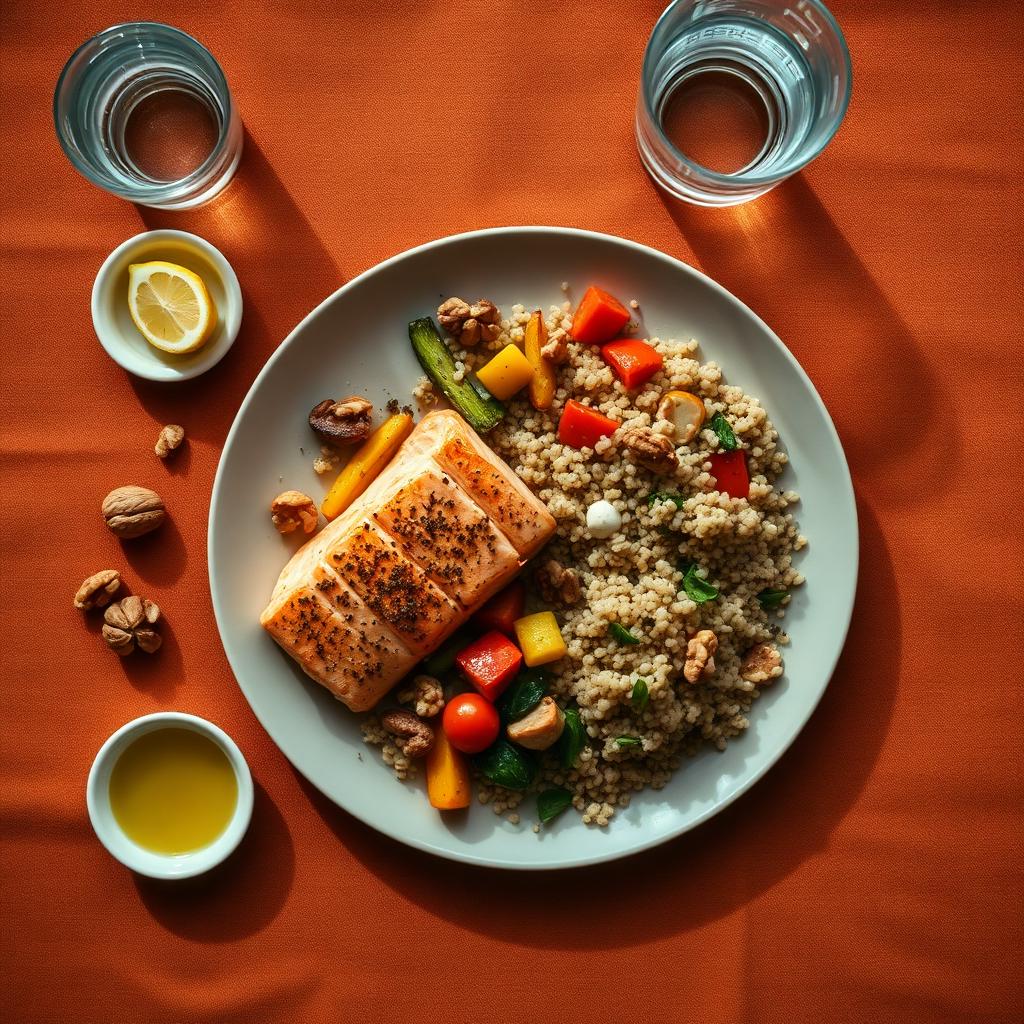
Rather than counting individual nutrients, most patients do better by anchoring on a repeatable weekday pattern and adjusting portions. This template lands inside sodium, protein, fiber, and phosphorus targets for stage 2–3 CKM without weighing food or logging every ingredient.
| Meal | What's on the plate | Why it works |
|---|---|---|
| Breakfast | Steel-cut oats with mixed berries, walnuts, cinnamon | Soluble β-glucan lowers LDL and blunts postprandial glucose |
| Lunch | Lentil–quinoa bowl with roasted vegetables and olive oil–lemon dressing | Plant protein + fiber + monounsaturated fat in one dish |
| Snack | Low-sodium Greek yogurt with a pear | Protein plus soluble fiber, easy on sodium and potassium |
| Dinner | Baked salmon with double-boiled potato and sautéed greens | Omega-3s with a potassium-managed starch |
| Fluids | Water, sparkling water, unsweetened tea across the day | Zero added sodium, no phosphoric acid, no sugar spikes |
Where the pattern needs individual tuning
The CKM baseline is remarkably stable across risk profiles, but four scenarios genuinely change the prescription. In each, the underlying Mediterranean pattern stays intact — a specific dial gets turned up or down.
CKD stage 3b–4
Protein drops to 0.6–0.8 g/kg. Watch potassium in beans, potatoes, and greens — double-boil starches and portion legumes.
Heart failure with fluid restriction
Sodium <1,500 mg/day. Skip broths and pickled foods; measure total fluid across food and drinks.
Type 2 diabetes on SGLT2 or GLP-1
Hold carbohydrate at ~40–50% of calories from whole sources; avoid ketogenic patterns that raise DKA risk on SGLT2 inhibitors.
Post-transplant
Sodium and simple sugars remain restricted; grapefruit is off the menu because of calcineurin-inhibitor interactions.
Two shifts in the last five years matter for CKM eating specifically. First, SGLT2 inhibitors (dapagliflozin, empagliflozin) and GLP-1 agonists (semaglutide, tirzepatide) now sit alongside RAS blockade as first-line CKM therapy — and each meaningfully reshapes appetite, carbohydrate tolerance, and hydration needs. Second, the DASH-Sodium and PREDIMED-Plus trials confirmed that combining sodium restriction with a Mediterranean pattern moves blood pressure more than either alone. The takeaway: this is one of the few chronic-disease areas where diet, medication, and staging all point in the same direction — the plan compounds.
References
- 1.Ndumele CE, et al. Cardiovascular-Kidney-Metabolic Health: A Presidential Advisory from the AHA. Circulation 2023. Read source ↗
- 2.He FJ, et al. Effect of longer-term modest salt reduction on blood pressure. Cochrane Database Syst Rev 2013. Read source ↗
- 3.Ikizler TA, et al. KDOQI Clinical Practice Guideline for Nutrition in CKD: 2020 Update. AJKD. Read source ↗
- 4.Brown L, et al. Cholesterol-lowering effects of dietary fiber: a meta-analysis. Am J Clin Nutr 1999. Read source ↗
- 5.Estruch R, et al. Primary Prevention of CVD with a Mediterranean Diet (PREDIMED). NEJM 2018. Read source ↗
- 6.Calvo MS, Uribarri J. Public health impact of dietary phosphorus excess. Am J Clin Nutr 2013. Read source ↗
- 7.Rebholz CM, et al. Dietary acid load and incident chronic kidney disease: results from the ARIC Study. Am J Nephrol 2015. Read source ↗
- 8.Lew QJ, et al. Red meat intake and risk of ESRD. JASN 2017. Read source ↗
About the author
Swetha Raju
Columbia M.S. Candidate in Clinical Human Nutrition · AKF Certified Kidney Health Coach · NKF Medical Advisory Committee (MAC) Member · NKF peer mentor · CKD patient advocate · Published chronic disease and nutrition researcher
Swetha Raju is the founder of NephroNourish. As a published researcher and lifelong chronic disease patient, she translates renal nutrition and metabolic science into practical guidance people can actually use.
A note on scope. This article is educational and not individual medical advice. Always discuss changes with your nephrologist, dietitian, or care team.