Autoimmune & Renal
Lupus Nephritis Diet: Protein, Salt, and Medication Interactions
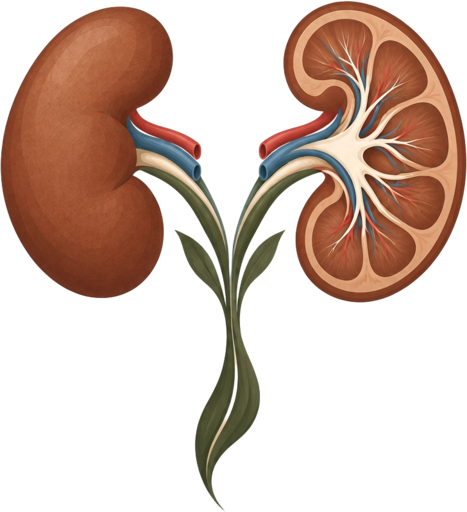
Lupus nephritis (LN) develops in roughly half of all adults with systemic lupus erythematosus and remains a leading driver of ESKD, hospitalization, and mortality in the disease — particularly in Black, Hispanic, and Asian patients, where rates of progression to advanced CKD are 2–3× higher than in White patients [1]. Diet in LN has to cover three jobs simultaneously: protect kidney function (control sodium, dose protein appropriately, manage proteinuria), blunt the metabolic and bone consequences of years of glucocorticoids, and avoid pharmacokinetic collisions with mycophenolate, calcineurin inhibitors, voclosporin, and hydroxychloroquine. No single 'lupus diet' does all of that. What works in practice is a deliberately overlapping framework of renal-aware, anti-inflammatory, and medication-aware eating, calibrated to disease activity at the time.
Where the guidelines land
EULAR 2023 and current guidelines both emphasize Mediterranean-style eating, sodium moderation, glucocorticoid minimization, and CV risk reduction as core to long-term LN management [2, 3]. KDIGO specifically recommends targeting blood pressure <130/80 (often <120/80 with significant proteinuria), sodium <2 g/day during active disease or hypertension, and protein at 0.6–0.8 g/kg/day if there is reduced GFR — recommendations that map closely to non-lupus CKD nutrition, just with steroid and immunosuppressant overlays.
Core nutrition principles by disease state
| Domain | Active flare / induction | Maintenance / remission | Why |
|---|---|---|---|
| Sodium | 1,500–2,000 mg/day | ≤2,300 mg/day | BP, edema, RAAS sensitivity |
| Protein (preserved GFR) | 0.8–1.0 g/kg/day | 0.8–1.0 g/kg/day | Adequate, not excess |
| Protein (eGFR <60 + proteinuria) | 0.6–0.8 g/kg/day | 0.6–0.8 g/kg/day | Slow GFR decline |
| Protein (dialysis) | 1.0–1.2 g/kg/day | 1.0–1.2 g/kg/day | Catabolic losses |
| Potassium | Per labs, often 2–3 g/day | Per labs, often 3–4 g/day | Avoid hyper-/hypokalemia |
| Phosphorus | <800–1,000 mg/day if advanced CKD | Per labs | CKD-MBD |
| Fluids | Per BP/edema; often 1.5–2 L | Drink to thirst | Avoid over- and under-filling |
| Vitamin D (25-OH) | Target 30–50 ng/mL | Target 30–50 ng/mL | Deficiency near-universal in SLE [4] |
| Calcium | 1,000–1,200 mg/day, food first | 1,000–1,200 mg/day | Steroid bone loss |
Medication–food interactions to know cold
| Medication | Watch for | Practical guidance |
|---|---|---|
| Prednisone / methylprednisolone | Weight gain, hyperglycemia, bone loss, fluid retention, hypokalemia | Front-load protein, limit refined carbs + sodium, calcium 1,000–1,200 mg/day + vitamin D, resistance training 2×/wk |
| Mycophenolate mofetil (CellCept) | GI upset, neutropenia, ↓ absorption with antacids | Take consistently with or without food; separate from magnesium/aluminum antacids by ≥2 hr; iron and PPIs can reduce absorption |
| Tacrolimus / cyclosporine | Narrow therapeutic window, CYP3A4 sensitivity | No grapefruit, Seville orange, pomelo, or starfruit; consistent meal timing; avoid St. John's wort and high-dose berberine |
| Voclosporin (Lupkynis) | Same CYP3A4 caveats as tacrolimus; hypertension; hyperkalemia | Same grapefruit avoidance; monitor BP and K; coordinate any K-sparing diuretic with rheum [6] |
| Belimumab / rituximab | Infection risk | No specific food interactions; keep vaccinations current per rheum |
| Hydroxychloroquine | Retinal toxicity (long-term) | Yearly ophthalmology screening; no specific food interactions; take with food to reduce GI upset |
| Cyclophosphamide | Bladder irritation, nausea, marrow suppression | Hydrate generously on and the day after infusion; small frequent meals; mesna per protocol |
| Warfarin (if APS overlap) | INR swings with vitamin K variability | Keep vitamin K intake consistent (don't avoid greens — eat a steady amount) |
Steroid-driven weight gain: the single biggest quality-of-life issue
Prednisone doesn't just make you hungry. It drives central adiposity, hyperglycemia, hypertension, sodium retention, sarcopenia, and insulin resistance — often all at once. Left unopposed, the biology pushes patients toward 20–30 lb of weight gain in the first year of moderate-to-high-dose therapy. But the effect isn't inevitable. Three habits, done together, cut the year-one weight gain roughly in half.
These three together typically keep first-year steroid weight gain to 5–10 lb instead of 20–30, and reduce the dose of antihypertensive and antiglycemic add-ons that so often follow.
Breakfast (7–9am)
30–40 g protein — Greek yogurt + berries + walnuts, or tofu scramble with spinach + sourdough. Front-loading blunts the mid-morning steroid appetite spike.
Mid-morning
Water or herbal tea; skip pastries or sugary coffee drinks. Steroid hyperglycemia peaks 4–6 hours after the morning dose.
Lunch (12–1pm)
Big salad + 4 oz lean protein + olive-oil vinaigrette + intact fruit. Keep refined carbs (bread, chips, fries) small.
Afternoon
Handful of nuts, an apple, or hummus with vegetables — anything to preempt the 4 pm sugar-crash reach for something processed.
Dinner
Half plate non-starchy vegetables, quarter plate lean protein, quarter plate whole grain or legume. Simple herbs; keep sodium light.
Evening
No third meal or dessert-plus-alcohol combo. Skip late-night snacking; sleep is when the anti-inflammatory work happens.
The anti-inflammatory layer
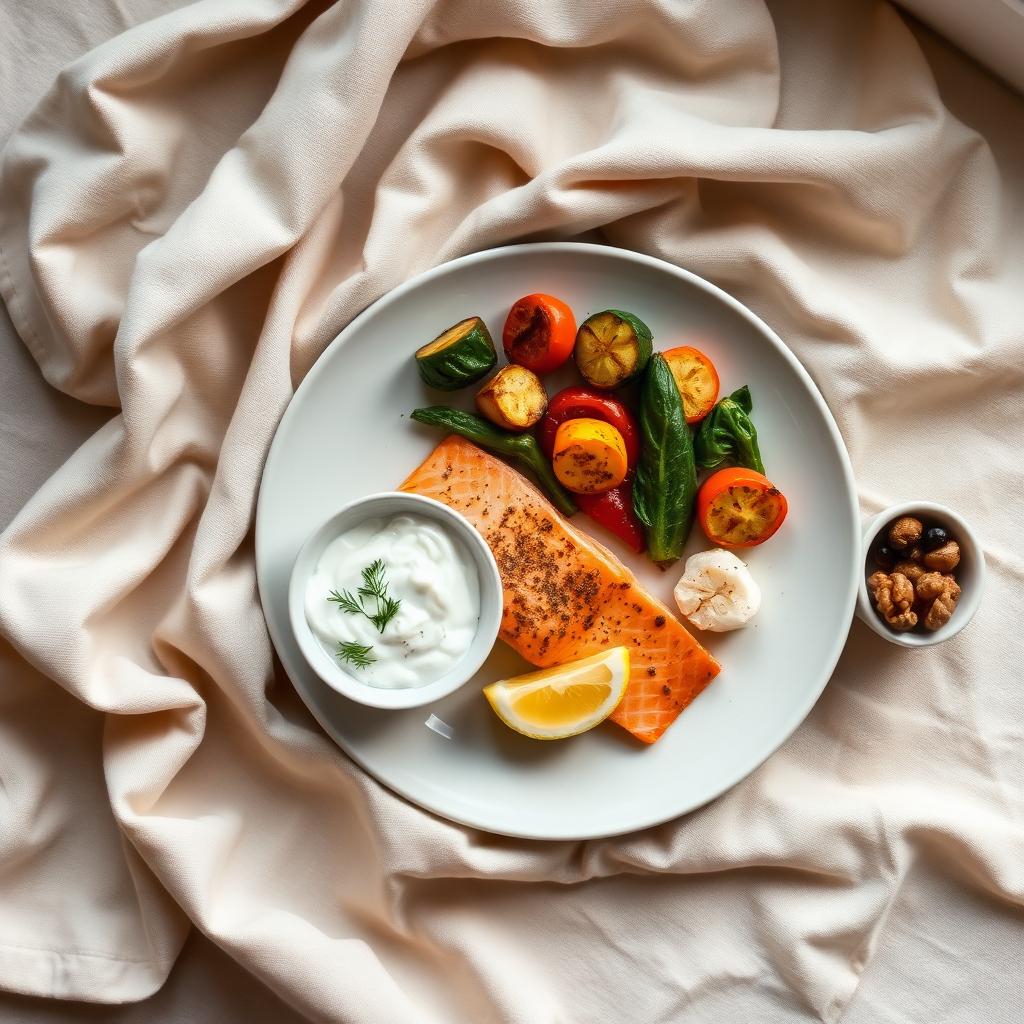
On top of the renal-friendly base, a Mediterranean overlay has the best evidence in lupus: extra-virgin olive oil 2–4 tbsp/day, fatty fish (salmon, sardines, mackerel) 2–3×/week for EPA/DHA, berries and leafy greens daily, legumes 3–5×/week, nuts as a snack, herbs and spices (turmeric, ginger) liberally. Small trials and observational data link this pattern to lower disease activity scores, lower CRP, and improved quality of life [5]. Equally important is what it displaces — ultra-processed food, sugary drinks, and trans fats that drive the cardiometabolic risk that is the actual cause of death in most SLE patients.
Flare-specific tweaks
Active nephritis with edema
Sodium to 1,500 mg. Daily morning weight. Photograph legs for trend. Elevate legs when sitting. Skip cured meats, canned soup, restaurant food entirely for the flare window.
High-dose pulse steroids
Bump protein to 1.0–1.2 g/kg. Emphasize non-starchy vegetables. Screen for new-onset hyperglycemia — fasting glucose and A1c at the next visit.
Nephrotic syndrome
Adequate (not excess) protein 0.8–1.0 g/kg. Sodium <2 g. Statin per cardiology. Watch for calf pain or swelling — venous thrombosis risk is real.
Hyperkalemia on RAAS + voclosporin
Potassium 2–3 g/day. Avoid potassium-based salt substitutes. If K keeps rising, ask about patiromer instead of dropping the RAAS drug.
SLE + APS on warfarin
Consistent vitamin-K intake. Eat greens predictably (same amount most days) rather than avoiding them entirely — steady is what keeps INR stable.
Pregnancy planning
Discontinue mycophenolate (teratogenic) with rheum before conception attempts. Folate, calcium, vitamin D. Switch to azathioprine or hydroxychloroquine per team.
Supplements with actual evidence (and what to skip)
The supplement aisle is chaos in lupus. Some interventions have real trial data. Most do not. And a small number are actively risky on immunosuppression. This is the short list — everything not on it should be run past your rheumatologist before you swallow it.
References
- 1.Almaani S, et al. Update on lupus nephritis. CJASN 2017;12(5):825–835. Read source ↗
- 2.Fanouriakis A, et al. EULAR recommendations for the management of SLE: 2023 update. Ann Rheum Dis 2024;83(1):15–29. Read source ↗
- 3.Kidney Disease: Improving Global Outcomes (KDIGO) 2024 Clinical Practice Guideline for the Management of Lupus Nephritis. Kidney Int 2024;105(1S):S1–S69. Read source ↗
- 4.Mok CC. Vitamin D and systemic lupus erythematosus: an update. Expert Rev Clin Immunol 2013;9(5):453–463. Read source ↗
- 5.Aparicio-Soto M, et al. Extra virgin olive oil: a key functional food for prevention of immune-inflammatory diseases. Food Funct 2016. Read source ↗
- 6.Rovin BH, et al. Efficacy and safety of voclosporin vs placebo in lupus nephritis (AURORA 1). Lancet 2021;397:2070–2080. Read source ↗
About the author
Swetha Raju
Columbia M.S. Candidate in Clinical Human Nutrition · AKF Certified Kidney Health Coach · NKF Medical Advisory Committee (MAC) Member · NKF peer mentor · CKD patient advocate · Published chronic disease and nutrition researcher
Swetha Raju is the founder of NephroNourish. As a published researcher and lifelong chronic disease patient, she translates renal nutrition and metabolic science into practical guidance people can actually use.
A note on scope. This article is educational and not individual medical advice. Always discuss changes with your nephrologist, dietitian, or care team.