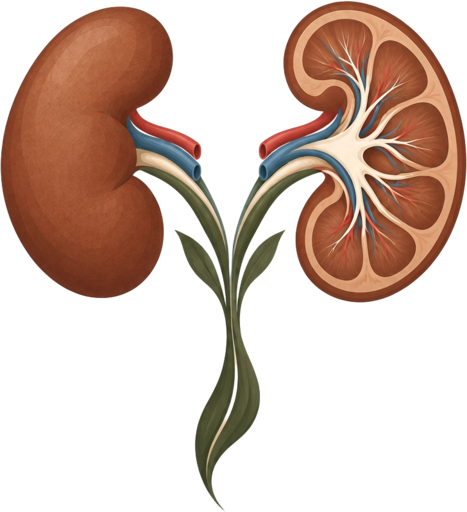
Renal Nutrition
Potassium and Kidney Disease: Foods to Limit and Foods That Are Actually Safe
If you've ever been handed a one-page 'renal diet' that bans bananas, oranges, potatoes, tomatoes, and beans, you've experienced one of the most over-applied dietary restrictions in modern medicine. The list is decades old, was built for late-stage dialysis patients, and gets handed to people with stage 2 CKD and normal potassium labs every day. Current renal-nutrition guidelines — the 2020 renal nutrition guideline and current KDIGO — paint a far more nuanced picture: potassium restriction should be matched to serum potassium, eGFR, medications, and the cardio-renal risk profile of cutting out fruits and vegetables [1, 2].
Why the old advice persists — and why it's risky
The fear is real: severe hyperkalemia (K⁺ >6.0 mEq/L) can cause life-threatening arrhythmias. The mistake is assuming every CKD patient is at that risk. In reality, plant-based potassium is buffered by accompanying alkali, fiber, and water content, and CKD patients on a higher-plant diet have lower observed rates of hyperkalemia than predicted by total potassium intake alone [3]. A 2021 KDIGO controversy paper explicitly argues that blanket fruit-and-vegetable restriction in early CKD likely does more cardiovascular harm than the potassium it removes [2]. The right question is not 'how much potassium is in this food' — it is 'is your serum potassium actually high, and if so, what is driving it?'
When potassium restriction actually matters
Restriction isn't a default — it's triggered by a specific lab pattern, a medication, or a clinical event. Use the decision map below to see whether the label applies to you before you cut a food group.
Persistently high labs
Serum K⁺ above 5.0–5.5 mEq/L on two or more clean draws — not a single hemolyzed sample.
Late-stage CKD or dialysis
eGFR under 30, on hemodialysis or peritoneal dialysis, or in an AKI episode with low urine output.
On K-raising medications
ACEi, ARB, MRA (spironolactone/eplerenone/finerenone), amiloride, Bactrim, heparin, or chronic NSAIDs — especially in combination.
Metabolic acidosis
Low serum bicarbonate drives potassium out of cells and into the blood. Treat the acidosis and K often falls without a diet change.
Most patients with stage 1–3a CKD and normal serum potassium do not need to limit dietary potassium. Restricting it unnecessarily cuts out fruits, vegetables, and legumes — the exact foods that lower cardiovascular events, slow CKD progression, and reduce all-cause mortality in observational and intervention data [3, 4].
Set your target by your labs, not by a handout
| Serum K⁺ (mEq/L) | CKD stage | Dietary K⁺ target | Behavior |
|---|---|---|---|
| 3.5–5.0 (normal) | 1–3a | No restriction | Mediterranean-style; emphasize plants |
| 3.5–5.0 (normal) | 3b–5 ND | 2,400–3,000 mg/day | Moderation; watch hidden K⁺ sources |
| 5.1–5.5 | Any | 2,000–2,400 mg/day | Watch portions of K⁺-dense foods; boil-and-drain starches |
| > 5.5 | Any | < 2,000 mg/day + medical review | Hold/reduce ACEi/ARB only with prescriber; rule out hemolysis on draw |
| Dialysis (PD/HD) | 5D | 2,000–3,000 mg/day | Coordinate with dialysate K⁺ and medications |
The actual high-potassium foods worth knowing
| Food | Portion | Potassium (mg) |
|---|---|---|
| Baked potato w/ skin | 1 medium | 925 |
| Sweet potato w/ skin | 1 medium | 540 |
| Avocado | 1 whole | 700–975 |
| Tomato sauce/paste | 1/2 cup | 660 |
| Cooked spinach | 1/2 cup | 420 |
| White beans, cooked | 1 cup | 1,000 |
| Lentils, cooked | 1 cup | 730 |
| Cantaloupe | 1 cup cubed | 430 |
| Honeydew | 1 cup cubed | 390 |
| Dried apricots | 1/2 cup | 755 |
| Raisins | 1/2 cup | 545 |
| Pumpkin seeds | 1 oz | 230 |
| Banana | 1 medium | 420 |
| Orange juice | 1 cup | 450 |
| Coconut water | 1 cup | 600 |
| Salt substitute (KCl-based) | 1/4 tsp | 600+ |
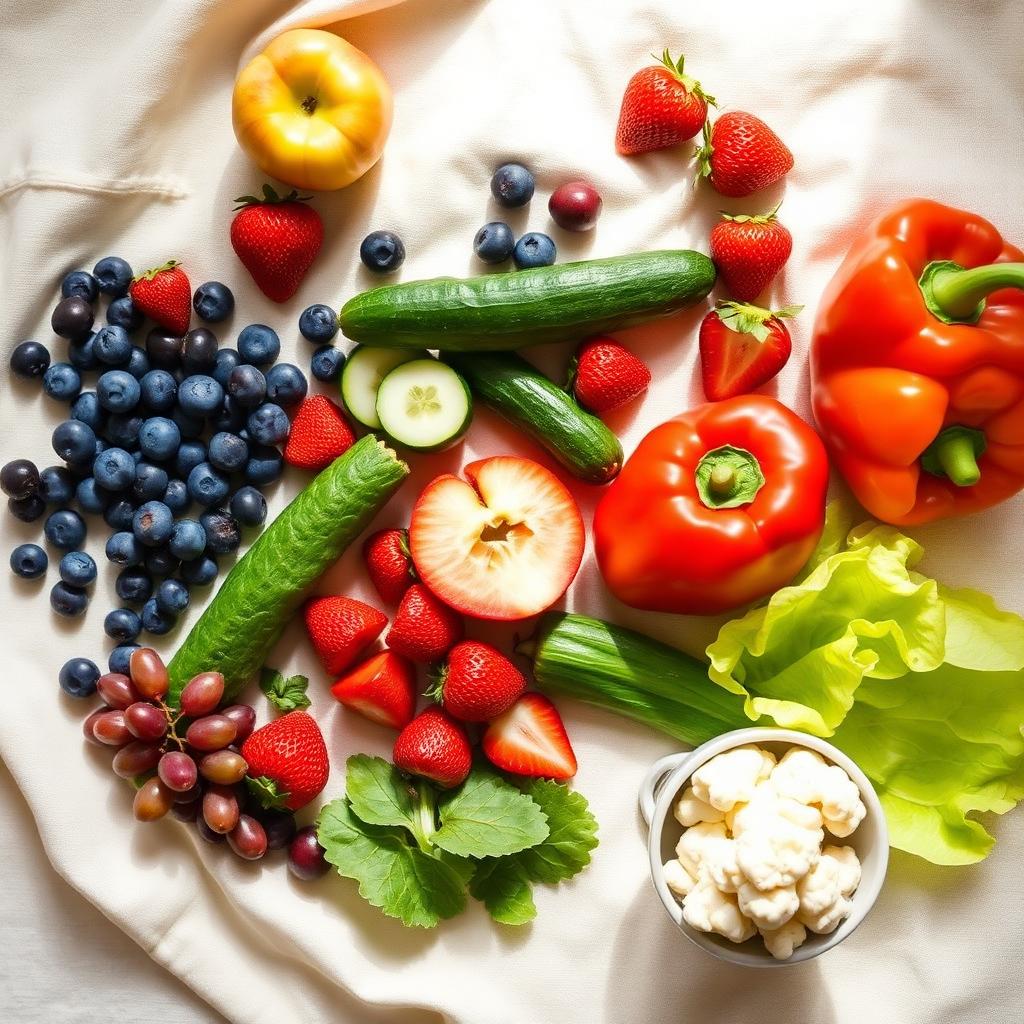
Low-potassium produce that's reliably safe
| Food | Portion | Potassium (mg) |
|---|---|---|
| Apple | 1 medium | 195 |
| Blueberries | 1/2 cup | 57 |
| Strawberries | 1/2 cup | 115 |
| Grapes | 1/2 cup | 150 |
| Pineapple | 1/2 cup | 90 |
| Watermelon | 1 cup cubed | 170 |
| Cherries | 1/2 cup | 170 |
| Cucumber | 1/2 cup sliced | 75 |
| Bell pepper, raw | 1/2 cup | 110 |
| Cabbage, raw | 1 cup | 150 |
| Lettuce, romaine | 1 cup | 115 |
| Green beans | 1/2 cup cooked | 90 |
| Cauliflower | 1/2 cup cooked | 175 |
| Zucchini, cooked | 1/2 cup | 230 |
| White rice | 1/2 cup cooked | 27 |
| Pasta | 1/2 cup cooked | 30 |
The boil-and-drain trick — and what it does and doesn't do
Soaking and boiling tuberous vegetables — then discarding the cooking water — reduces potassium content in potatoes, sweet potatoes, carrots, and rutabaga by 30–50% [5]. Technique: cube into 1/2-inch pieces, soak 2+ hours in fresh water, boil in unsalted fresh water 10 minutes, drain. The same process reduces sodium-leachable phosphorus in canned legumes by ~30%. What it doesn't do: lower potassium in fruits, leafy greens, or already-cooked dishes. It also leaches water-soluble vitamins (C, B-complex), so don't apply it indiscriminately to vegetables that aren't a potassium problem.
1. Cube
Peel and cube potatoes/sweet potatoes to ~1/2-inch pieces — smaller pieces release more potassium.
2. Soak
Cover with fresh cool water, soak at least 2 hours (4+ hours is better). Change the water once if possible.
3. Drain and refill
Discard soak water. Cover with fresh unsalted water in a fresh pot.
4. Boil
Boil 10 minutes at a rolling boil. Do not lid tightly — potassium escapes with the steam.
5. Drain again
Discard boil water completely. Now finish however you like — roast, mash, sauté — as if starting from raw.
The forgotten source: potassium-based salt substitutes
'No salt added' or 'low-sodium' products often replace sodium chloride with potassium chloride. A single 1/4 tsp of NoSalt, Lite Salt, or many 'pink Himalayan low-sodium' blends can deliver 600 mg of highly bioavailable potassium — more than a banana, in a serving size people don't think twice about. Cardiac patients are sometimes encouraged to use KCl substitutes (the SSaSS trial 2021 showed cardiovascular benefit in non-CKD populations [6]), but in CKD with eGFR <45 or on RAAS inhibitors, that same substitute is a fast-acting potassium load. Read labels. If 'potassium chloride' is on the ingredient list of a 'healthy' seasoning, deli meat, low-sodium broth, or 'reduced-sodium' snack, it counts toward your daily total.
Other commonly missed potassium sources
These aren't on the classic renal handout because they're marketed as healthy — but each one can quietly deliver a banana's worth of highly bioavailable potassium in a serving people don't measure.
Coconut water
~600 mg per cup. Positioned as a natural electrolyte drink; behaves like liquid KCl in CKD.
'Electrolyte' sports drinks
Many now use potassium citrate. LMNT, Liquid IV, and several 'hydration multipliers' can add 300–500 mg per stick.
Low-sodium broths and bouillons
'Reduced sodium' usually means KCl-substituted. A single cup of broth in a soup base can hit 400+ mg.
Reduced-sodium soy sauce & tamari
Sodium is swapped for potassium chloride. Two tablespoons can rival a banana.
'Heart-healthy' deli meats
Lower-sodium turkey, ham, and roast beef are frequently KCl-substituted — check the ingredient list, not the marketing.
Bone broth & long-simmered stock
Long simmers concentrate potassium along with the collagen. Homemade doesn't mean low-K.
Molasses & blackstrap molasses
500+ mg per 2 Tbsp. Common in 'iron-boosting' smoothies and homemade granola.
Salt-free seasoning blends
Mrs. Dash and many 'salt-free' rubs list potassium chloride first or second. Read the panel every time.
Medication review before food restriction
If your potassium is climbing, the medication review usually outranks the food review. ACEi/ARB/MRA combinations, NSAIDs (ibuprofen, naproxen), trimethoprim-sulfamethoxazole, heparin, and beta-blockers can all raise potassium. Newer potassium binders (patiromer/Veltassa, sodium zirconium cyclosilicate/Lokelma) often allow patients to stay on cardioprotective RAAS inhibitors at full dose without dietary restriction — a major shift from 10 years ago [7]. Talk to your nephrologist before assuming you have to cut fruit.
Sample CKD stage 3b day at ~2,400 mg potassium
| Meal | What's on the plate | Approx. K⁺ |
|---|---|---|
| Breakfast | 2 scrambled eggs · 1/2 cup blueberries · 1 slice low-sodium toast w/ olive oil | ~250 mg |
| Snack | 1 medium apple · 1 Tbsp peanut butter | ~290 mg |
| Lunch | 3 oz grilled chicken thigh · 1 cup mixed greens · cucumber · bell pepper · 1/2 cup pasta · olive-oil vinaigrette | ~600 mg |
| Snack | 1/2 cup strawberries · 4 oz Greek yogurt | ~290 mg |
| Dinner | 3 oz salmon · 1/2 cup double-boiled mashed potato · 1/2 cup roasted green beans | ~600 mg |
| Beverages | Water · sparkling water · light brewed tea | ~50 mg |
| Day total | Normal plate, no banned foods | ~2,100–2,400 mg |
References
- 1.Ikizler TA, et al. KDOQI Clinical Practice Guideline for Nutrition in CKD: 2020 Update. AJKD 2020;76(3 Suppl 1):S1-S107. Read source ↗
- 2.Clase CM, et al. Potassium homeostasis and management of dyskalemia in kidney diseases: KDIGO Controversies Conference. Kidney Int 2020;97(1):42-61. Read source ↗
- 3.Goraya N, Wesson DE. Management of the metabolic acidosis of chronic kidney disease. Adv Chronic Kidney Dis 2017. Read source ↗
- 4.Kelly JT, et al. Healthy dietary patterns and risk of mortality and ESKD in CKD: meta-analysis. CJASN 2017;12(2):272-279. Read source ↗
- 5.Burrowes JD, Ramer NJ. Removal of potassium from tuberous root vegetables by leaching. J Ren Nutr 2006;16(4):304-11. Read source ↗
- 6.Neal B, et al. Effect of salt substitution on cardiovascular events and death (SSaSS). N Engl J Med 2021;385:1067-77. Read source ↗
- 7.Agarwal R, et al. Patiromer versus placebo to enable spironolactone use in patients with resistant hypertension and CKD (AMBER). Lancet 2019. Read source ↗
About the author
Swetha Raju
Columbia M.S. Candidate in Clinical Human Nutrition · AKF Certified Kidney Health Coach · NKF Medical Advisory Committee (MAC) Member · NKF peer mentor · CKD patient advocate · Published chronic disease and nutrition researcher
Swetha Raju is the founder of NephroNourish. As a published researcher and lifelong chronic disease patient, she translates renal nutrition and metabolic science into practical guidance people can actually use.
A note on scope. This article is educational and not individual medical advice. Always discuss changes with your nephrologist, dietitian, or care team.