Renal Nutrition
Renal-Friendly Grilling Guide (Summer Edition)
Summer cookouts are one of the highest-risk weeks of the year for CKD patients on a careful eating pattern. Most store-bought marinades, rubs, and 'pre-seasoned' or 'flavor-enhanced' meats are loaded with sodium phosphate, potassium chloride, sodium benzoate, and disodium guanylate — additives that drive serum phosphorus, potassium, and blood pressure in a population that is already on a tight budget for all three [1, 2]. A few habit swaps keep grilling season CKD-friendly without sacrificing flavor or the social side of the meal.
Read the label before you fire up the grill
The single highest-leverage change is buying truly fresh protein — not 'enhanced,' not 'self-basting,' not 'pre-marinated,' not 'flavor-infused.' These labels are USDA-approved euphemisms for protein injected with a saltwater + sodium-phosphate brine that can add 600–1,000 mg of sodium and 200–400 mg of added phosphorus per 4 oz serving [3]. Look on the label for phrases like 'contains up to X% solution of water, salt, sodium phosphate' or 'minimally processed; contains up to 12% retained water.' If you see it, put it back. The same chicken thigh from a butcher counter or from a brand labeled 'no added solution' delivers about a third of the sodium and almost none of the additive phosphorus.
Best proteins for the grill — CKD-friendly picks
| Protein | Sodium (mg) | Phosphorus (mg) | Notes |
|---|---|---|---|
| Fresh chicken thigh (skin off, no brine) | 70 | 150 | Avoid 'plumped' or 'enhanced' — read the label |
| Fresh chicken breast (no brine) | 65 | 210 | Higher phosphorus than thigh — portion to 3 oz |
| Wild salmon | 50 | 215 | Omega-3 anti-inflammatory bonus |
| Mahi-mahi | 85 | 140 | Mild flavor, holds up to bold marinades |
| Halibut | 60 | 240 | Higher phosphorus — single 3 oz portion |
| Shrimp (peeled, untreated) | 190 | 150 | Many bagged shrimp are STP-treated — read label |
| Grass-fed sirloin (3 oz) | 55 | 175 | Occasional, not weekly |
| Lean lamb chop, trimmed | 60 | 175 | Pairs well with mint and yogurt |
| Pork tenderloin (fresh, not enhanced) | 55 | 190 | Often labeled with 'solution' — verify |
| Marinated firm tofu skewers | 10 | 120 | Lowest-sodium swap; soak in DIY marinade |
| Tempeh skewers | 10 | 200 | Higher protein than tofu; nutty flavor |
DIY marinade base — zero hidden additives
The template that works for almost everything on the grill: 3 parts olive oil + 1 part acid (fresh lemon juice, lime juice, or white wine vinegar) + smashed garlic + a small handful of fresh herbs + crushed black pepper. Marinate poultry 2–4 hours, fish 30–60 minutes, beef and lamb 4–24 hours. The marinade does two things well: it tenderizes the surface via acid hydrolysis, and the herbs and aromatics carry flavor that salt usually does. Skip soy sauce (1,000+ mg sodium/Tbsp), Worcestershire (anchovy + sodium + tamarind concentrate), and bottled BBQ sauce (sugar + sodium + phosphate).
| Style | Ingredients | Best for |
|---|---|---|
| Mediterranean | 1/4 cup olive oil, 2 Tbsp lemon juice, 1 tsp lemon zest, 3 cloves garlic minced, 1 Tbsp oregano, black pepper | Chicken thigh, lamb, halloumi |
| Tex-Mex (low-Na) | 1/4 cup olive oil, juice of 2 limes, 1 Tbsp cumin, 1 Tbsp smoked paprika, 1 tsp coriander, black pepper | Chicken, shrimp, flank steak |
| Asian-inspired (no soy) | 1/4 cup olive oil, 2 Tbsp rice vinegar, 1 Tbsp grated ginger, 2 cloves garlic, 1 tsp toasted sesame oil, 1 tsp honey | Salmon, tofu, mahi-mahi |
Three flavor-builder rubs (per 1 lb protein)
Rubs are how you get flavor without a bottle. Mix each one dry in a small bowl, pat onto the surface of the protein 15–30 minutes before grilling, and you'll never notice the missing salt.
Mediterranean dry rub
1 tsp dried oregano · 1 tsp garlic powder · ½ tsp lemon zest · black pepper. Best on chicken thigh, lamb, halloumi. Bright and herbal — pairs with a lemon-yogurt drizzle at the end.
Smoky BBQ (no bottle)
1 tsp smoked paprika · ½ tsp cumin · ½ tsp garlic powder · ½ tsp brown sugar · black pepper. Best on chicken, pork tenderloin, salmon. Delivers the smoky-sweet register that bottled BBQ sauce is faking.
Fresh herb crust
1 Tbsp rosemary + 1 Tbsp thyme (chopped) · 1 Tbsp olive oil · ½ tsp garlic powder · black pepper. Best on beef, lamb, mushrooms, tofu steaks. The olive oil binds the herbs into a paste so the flavor stays put on the grill.
Char, heterocyclic amines, and a CKD-aware grilling technique
Direct high-heat grilling of muscle meats produces heterocyclic amines (HCAs) and polycyclic aromatic hydrocarbons (PAHs), both classified as probable carcinogens [4]. CKD patients are not at unique additional risk from HCAs themselves, but the same techniques that produce them — extreme char, dripping fat onto flame — also produce advanced glycation end products (AGEs), and circulating AGEs are elevated and harmful in CKD [5]. Practical mitigations: marinate (acidic marinades reduce HCA formation up to 90%), avoid the most charred bits, grill at moderate rather than maximum heat, flip frequently (reduces surface temperature peaks), and pair grilled protein with antioxidant-rich vegetables (peppers, herbs, citrus). You don't need to abandon the grill — you do want to avoid the carbonized crust.
1. Preheat moderate, not maximum
Aim for ~400–450°F, not the 550–650°F max sear setting. Slower cook, less char, less AGE formation.
2. Marinate
Acid-based marinade for at least 30 min. Cuts HCA formation up to 90% [4].
3. Flip often
Every 60–90 seconds instead of a single dramatic flip. Keeps surface temperature from spiking.
4. Skip the char
Trim off any carbonized black bits before serving. Golden-brown is the goal; charred-black is not.
5. Rest and add fresh acid
Let the protein rest 5 min, then finish with a squeeze of lemon or lime. Fresh acid does 90% of what a bottled sauce does with none of the sodium.
CKD-safe sides — make them yourself
Almost every classic cookout side, done at home, drops 400–600 mg of sodium and eliminates the phosphate additives entirely. Pick two or three from the grid below and you have a full spread that doesn't touch a bottle.
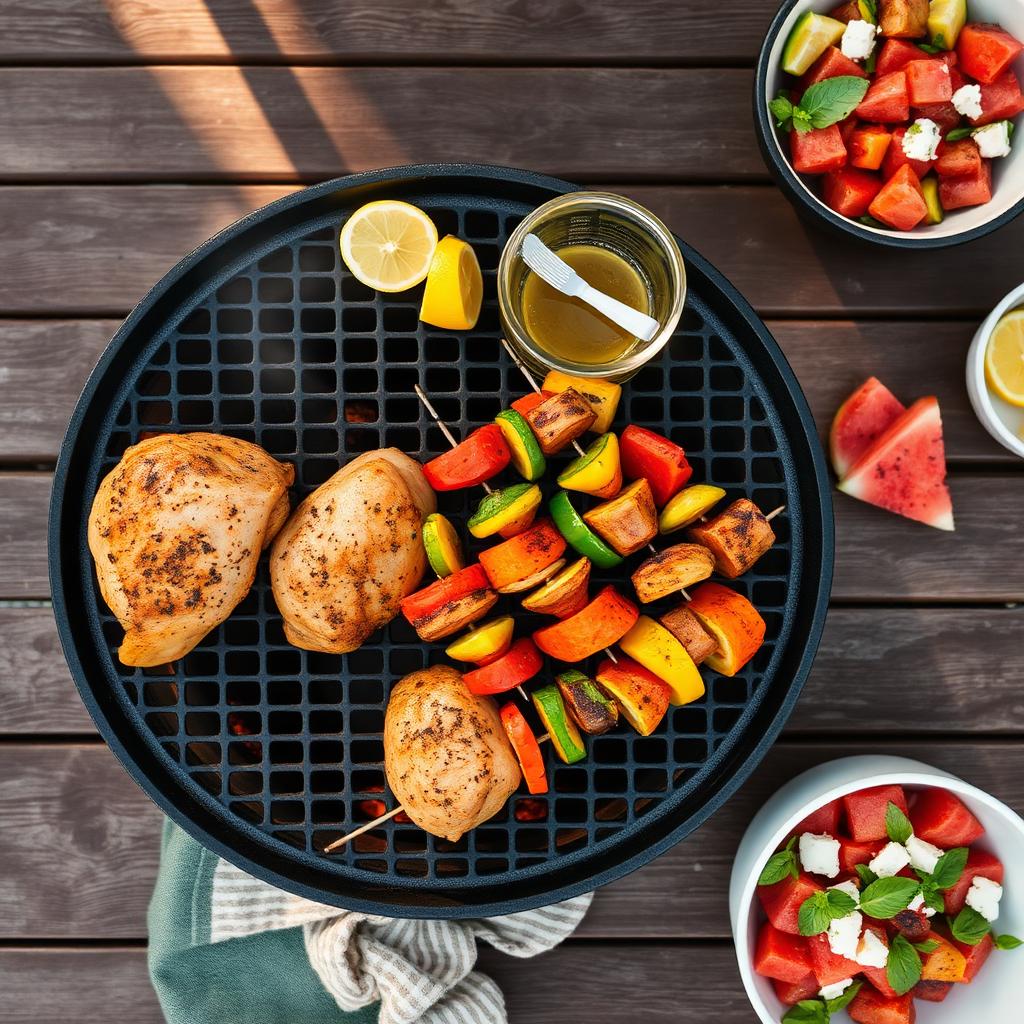
Grilled zucchini, squash & peppers
Toss in olive oil, black pepper, oregano. Char lightly on both sides. The vegetables carry the flavor — no bottled dressing needed.
Cucumber-dill yogurt salad
½ cup plain Greek yogurt + diced cucumber + lemon + dill. Portion the yogurt (~180 mg phosphorus per ½ cup); the cucumber is essentially free.
Watermelon-feta-mint salad
Watermelon (~170 mg K per cup) + 1 oz feta + mint + lime. Sweet, hydrating, and low-additive — one of the few 'summer' sides that reads as festive.
Corn on the cob with herb butter
Skip the salt shaker; corn is naturally sweet. One ear is ~195 mg potassium and modest phosphorus — most CKD patients tolerate it easily.
Quick apple-cabbage slaw
Shredded cabbage + carrot + apple, olive-oil-and-lemon dressing. Skip the mayo-based tubs from the deli case — those are the 600+ mg sodium bombs.
Homemade pasta or orzo salad
Al dente pasta + cucumber + bell pepper + basil + olive oil + lemon + fresh black pepper. No mayo, no bottled dressing, no 'ranch packet.'
Fresh tomato-basil salad
Ripe tomato + basil + 1 oz fresh mozzarella + balsamic + pepper. Ten ingredients or fewer, most from a garden or farmer's market.
Grilled peaches or pineapple
Dessert without a bottle. Halve, brush with a little olive oil, char for 2 minutes per side, finish with balsamic or a small scoop of vanilla ice cream.
What to skip — and what to swap in
| Traditional cookout item | Sodium (mg) | CKD-friendly swap | Sodium (mg) |
|---|---|---|---|
| Hot dog (1) | 600+ | Fresh chicken sausage (no nitrites/phosphates) or grilled chicken thigh | 75 |
| Brat or pork sausage | 650+ | Grilled pork tenderloin (fresh, un-enhanced) | 55 |
| Pre-formed beef patty (frozen) | 450+ | Fresh ground sirloin patty, hand-formed, no salt | 55 |
| Bottled BBQ sauce, 2 Tbsp | 450 | DIY tomato-balsamic glaze, 2 Tbsp | 45 |
| Store-bought potato salad, 1/2 cup | 660 | Double-boiled potato salad w/ Greek yogurt + dill | 120 |
| Store-bought macaroni salad, 1/2 cup | 590 | Homemade orzo salad w/ herbs + lemon | 100 |
| Pickle spear | 300 | Fresh cucumber rounds with dill and pepper | 5 |
| Bagged chips (kettle), 1 oz | 170 | Air-popped popcorn with herb seasoning | 5 |
Drinks at the cookout
The drinks table at a summer cookout is where most of the hidden phosphate, potassium chloride, and added sugar hides. Use this stoplight to sort them at a glance.
Sparkling water with citrus
The single best cola replacement at any cookout — no phosphoric acid, no calories, no additives. Cucumber, mint, or berries in a pitcher upgrades it to something guests will actually reach for.
Lightly brewed unsweet iced tea
Keeps oxalate in check (heavy iced tea is a stone risk). Add mint or a lemon wheel; skip the bottle-sweetened varieties, which are often 30+ g sugar per glass.
Homemade fruit agua fresca
Watermelon + lime + a splash of sparkling water. Festive, kid-friendly, essentially additive-free. Portion the watermelon if you're potassium-restricted (~170 mg K per cup).
One beer or 5 oz dry wine
Fine if it fits your fluid allowance. Alternate with water. Skip the second on a hot day — alcohol + heat + ACE/ARB or SGLT2 = AKI risk.
Skip: cola, sports drinks, salt-substitute mixers
Regular colas are the biggest phosphoric-acid load in the American drinks aisle. Sports drinks are engineered for endurance athletes, not CKD. 'Zero-sodium' salt substitutes swap in potassium chloride — read the label.
Hosting strategy — control the menu, control the labs
The simplest path to a CKD-friendly cookout is hosting it. You buy the protein (fresh, un-enhanced), you make the marinade, you grill the vegetables. Guests bring drinks, a salad, or dessert — none of which require you to negotiate sodium content with someone else's brand of pickles. When you're a guest, offer to bring the protein or a vegetable side; that single move guarantees there is something on the table you can eat freely. Eat the protein and vegetables first, save the starchy and processed sides for what fits the rest of your day's budget, and bring sparkling water in a glass bottle so you have a default drink that doesn't get re-filled with cola.
Don't forget the binder
If you take phosphate binders, the cookout rules are the same as any other meal: with the first bite, dose matched to the meal size, skip a dose for chips-only grazing. Keep them with you — pocket, purse, car cupholder — not on a kitchen counter eight miles away. Missed binder doses at backyard meals are one of the most common reasons phosphorus drifts up over the summer.
References
- 1.Sherman RA, Mehta O. Phosphorus and potassium content of enhanced meat and poultry products: implications for patients who receive dialysis. CJASN 2009;4(8):1370-3. Read source ↗
- 2.Calvo MS, Uribarri J. Public health impact of dietary phosphorus excess on bone and cardiovascular health in the general population. AJCN 2013;98(1):6-15. Read source ↗
- 3.Ritz E, Hahn K, Ketteler M, et al. Phosphate additives in food — a health risk. Dtsch Arztebl Int 2012;109(4):49-55. Read source ↗
- 4.National Cancer Institute. Chemicals in Meat Cooked at High Temperatures and Cancer Risk. NCI 2018. Read source ↗
- 5.Uribarri J, et al. Advanced glycation end products in foods and a practical guide to their reduction in the diet. J Acad Nutr Diet 2010;110(6):911-916. Read source ↗
About the author
Swetha Raju
Columbia M.S. Candidate in Clinical Human Nutrition · AKF Certified Kidney Health Coach · NKF Medical Advisory Committee (MAC) Member · NKF peer mentor · CKD patient advocate · Published chronic disease and nutrition researcher
Swetha Raju is the founder of NephroNourish. As a published researcher and lifelong chronic disease patient, she translates renal nutrition and metabolic science into practical guidance people can actually use.
A note on scope. This article is educational and not individual medical advice. Always discuss changes with your nephrologist, dietitian, or care team.