Renal Nutrition
SGLT2 Inhibitors and CKD: What to Eat on Jardiance, Farxiga
SGLT2 inhibitors (sodium-glucose co-transporter 2 inhibitors) are arguably the biggest practical advance in nephrology and cardiology in the last 20 years. Originally developed as glucose-lowering drugs for type 2 diabetes, they have produced consistent, large reductions in CKD progression, heart failure hospitalization, and cardiovascular death across populations with and without diabetes [1, 2]. DAPA-CKD and EMPA-KIDNEY together established the class as Grade 1A first-line therapy in CKD with albuminuria per current guidelines [3], with effect sizes that rival or exceed RAS blockade — and additive on top of it.
The mechanism is elegant: blocking the SGLT2 transporter in the proximal tubule causes glucose and sodium to be excreted in urine. The increased sodium delivery to the macula densa restores tubuloglomerular feedback, constricts the afferent arteriole, and lowers intraglomerular pressure — the same hemodynamic move that makes ACE inhibitors and ARBs renoprotective, but achieved from a different direction. Secondary effects include modest weight loss, mild diuresis, lowered uric acid, improved erythropoiesis, and a metabolic shift toward ketones as a tubular fuel source. That last effect creates a small set of nutrition rules that genuinely matter — particularly around carbohydrate intake, hydration, and management around surgery.
What the trials showed
The class was validated in a cascade of large, well-powered outcome trials that shifted nephrology and cardiology guidelines within a few years. The pattern is remarkable for its consistency: benefit shows up across CKD stages, across diabetic and non-diabetic populations, across heart failure phenotypes, and on top of ACE inhibitor or ARB therapy [1, 2, 4].
| Trial | Drug | Population | Primary outcome reduction |
|---|---|---|---|
| DAPA-CKD [1] | Dapagliflozin 10 mg | eGFR 25–75, UACR ≥200, ±diabetes | 39% composite kidney event |
| EMPA-KIDNEY [2] | Empagliflozin 10 mg | eGFR 20–45 or 45–90 + UACR ≥200, ±diabetes | 28% kidney progression / CV death |
| CREDENCE [4] | Canagliflozin 100 mg | T2D + CKD + UACR >300 | 30% kidney/CV composite |
| DAPA-HF / EMPEROR-Reduced | Dapa / Empa | HFrEF ±diabetes | 26% / 25% CV death + HF hospitalization |
| EMPEROR-Preserved / DELIVER | Empa / Dapa | HFpEF ±diabetes | 21% / 18% CV death + HF hospitalization |
| FLOW (semaglutide, comparator) | Semaglutide 1.0 mg | T2D + CKD | 24% renal/CV composite (referenced for context) |
Two things stand out. First, the benefit is largely independent of glycemic effect — non-diabetic CKD patients in DAPA-CKD and EMPA-KIDNEY benefited at the same magnitude. Second, the effect is additive on top of ACE/ARB therapy; SGLT2 inhibition is now a second pillar of CKD pharmacotherapy alongside RAS blockade, not a replacement.
Common side effects and the nutrition workarounds
| Side effect | Mechanism | Practical guidance |
|---|---|---|
| Volume depletion / postural hypotension | Mild osmotic diuresis (~300–500 mL/day) | Hydrate consistently to 1.5–2.0 L/day; coordinate diuretic dose with prescriber |
| Genital mycotic infection (yeast) | Glucosuria changes vaginal/perineal environment | Hygiene; promptly treat; risk is ~3–4× baseline |
| UTI | Mild risk increase | Hydrate; symptomatic treatment as usual |
| Euglycemic DKA | Shift toward ketogenesis + insufficient insulin | Avoid very-low-carb / keto diets; hold drug 3 days pre-op or before prolonged fasting per FDA |
| Mild eGFR dip at initiation (4–6 weeks) | Hemodynamic — same as ACE/ARB start | Expected; reflects tubuloglomerular feedback restoration; do not stop |
| Lower extremity amputation (canagliflozin only, CANVAS signal) | Uncertain | Mostly historical; not seen in CREDENCE/DAPA-CKD; foot care for high-risk patients |
Three nutrition shifts that matter
1. Hydrate consistently
SGLT2 inhibitors cause an osmotic diuresis of ~300–500 mL/day. Aim for ~1.5–2.0 L/day total fluid unless you have a clinical fluid restriction (heart failure with active congestion, advanced CKD with edema). Volume depletion is the most common reason for early discontinuation [5]. If you are on a loop diuretic, coordinate the dose with your prescriber after starting an SGLT2 inhibitor — the diuretic dose often needs to come down 25–50% to avoid pre-renal AKI.
2. Don't go very low carb (and never ketogenic)
Combining SGLT2 inhibitors with ketogenic or very-low-carb diets meaningfully raises the risk of euglycemic diabetic ketoacidosis (euDKA) — DKA at normal or near-normal glucose levels, which is easy to miss and can be life-threatening [6]. The FDA has issued a black-box-level warning. The rule: keep at least 130 g carbohydrate per day, spread across meals; avoid extended fasting (>16 hours) without consulting your prescriber; and hold the medication for 3 days before surgery or any prolonged NPO period per FDA guidance.
3. Watch for genital and urinary symptoms
Glucosuria raises the risk of genital mycotic (yeast) infections roughly 3–4-fold, particularly in uncircumcised men and women with prior history. Cranberry, adequate fluids, and prompt hygiene reduce risk. UTI risk is mildly elevated but manageable. A rare but serious complication — Fournier's gangrene — has been reported; any rapidly spreading perineal pain, swelling, or fever requires immediate medical attention.
Foods to emphasize
The eating pattern that supports an SGLT2 inhibitor is genuinely simple: enough carbohydrate at every meal to keep ketogenesis quiet, enough fluid and sodium to keep the plasma volume steady against the extra pee, and stage-appropriate protein and produce. Nothing exotic — the goal is consistency, not a specialty 'SGLT2 diet.'
Carb backbone at every meal
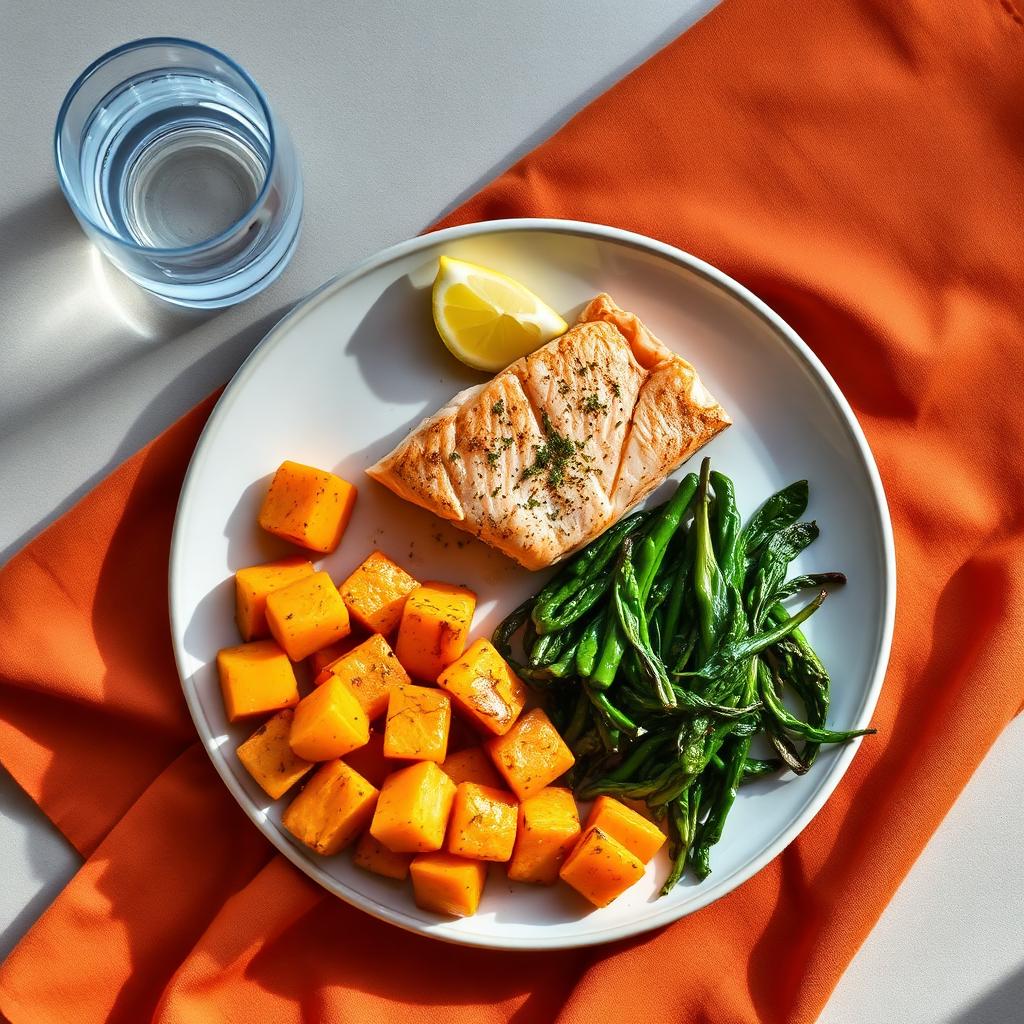
Oats, quinoa, sweet potato, brown rice, whole-grain bread, lentils, beans. Aim for a fist-sized starch at breakfast, lunch, and dinner so total intake sits comfortably above 130 g/day — the euDKA safety floor.
Consistent fluid
1.5–2.0 L/day of water, herbal tea, or diluted juice spread across the day. Not chugged, not restricted. Coordinate with your prescriber if you carry heart failure fluid limits.
Reasonable sodium — don't overshoot low
2,000–2,300 mg/day is the target. Cutting to 1,500 mg while on an SGLT2 inhibitor is a common cause of dizziness on standing; the drug is already dropping your plasma volume mildly.
Stage-appropriate protein
0.6–0.8 g/kg/day non-dialysis per KDOQI [7]; 1.0–1.2 g/kg on dialysis. Mix plant and animal sources — SGLT2s do not change the protein rules.
Magnesium-rich produce
Pumpkin seeds, leafy greens, dark chocolate, avocado (potassium-adjusted). SGLT2s modestly increase magnesium reabsorption — a quiet bonus for diabetic patients who often start low.
Potassium: eat normally
SGLT2 inhibitors don't meaningfully raise serum potassium and often blunt the small rise from ACE/ARB therapy. Follow your usual stage-based produce rules — no extra restriction needed just because you started the drug.
Foods and contexts to avoid or limit
The 'avoid' list is short and almost entirely about euglycemic DKA and volume depletion — the two mechanisms that turn a well-tolerated drug into an ER visit. Everything on this list has a specific reason attached.
Ketogenic or very-low-carb diets
Anything under ~100 g carb/day is the single biggest euDKA trigger on this class [6]. If you want to lose weight, use portion control and Mediterranean-style eating — not keto.
Prolonged fasting (>16 hours)
Extended intermittent fasting, religious fasting days, or clean-out prep without medication coordination all push toward ketogenesis. Hold the drug or shorten the fast — call your prescriber before Ramadan, Yom Kippur, or a colonoscopy prep.
Heavy alcohol
Alcohol suppresses hepatic gluconeogenesis and adds diuresis on top of the drug's own. A glass of wine with dinner is fine; three drinks on an empty stomach on a hot day is how people wind up in the ER.
Sugar-sweetened beverages & fruit juice
They spike glucose that the drug then dumps in urine — you get zero metabolic benefit and undercut the weight-loss and A1c effect. Choose water, unsweetened tea, or sparkling water instead.
NSAIDs during any dehydrating illness
Ibuprofen, naproxen, ketorolac add AKI risk on top of the small drop in plasma volume from SGLT2s. Use acetaminophen for fever and pain on sick days.
'Cranberry juice cocktail' for UTI prevention
It's mostly sugar and offers little PACs. Use unsweetened cranberry juice or a standardized capsule if you want the anti-adhesion effect without feeding the yeast the drug already puts you at risk for.
Sick-day rules — the most important practical knowledge for SGLT2 users
Almost every SGLT2-related hospitalization traces back to a missed sick-day hold. The rule is deliberately simple so it's easy to remember when you feel awful: if food and fluid aren't going in normally, the drug comes off until they are.
Hold the pill
First thing in the morning of any sick day: skip the SGLT2 dose. Do not take a 'catch-up' dose the next day — just resume the normal schedule when you're eating and drinking normally.
Small, frequent sips
4–6 oz of water, broth, or a low-sugar electrolyte drink every 15–30 minutes. If you can't keep even sips down for more than 4 hours, that's an ER trigger — not a wait-and-see.
Check for red-flag symptoms
Rapid weight loss, fruity-smelling breath, nausea with belly pain, or unusual sleepiness — these can be euDKA even with normal glucose. Any one of them + an SGLT2 = go to the ED and tell them you're on the drug.
Call your prescriber
Even if you feel fine holding the pill, one call gets your diuretic, insulin, and BP-medication doses re-checked. That's often what actually needs adjusting during illness — not the SGLT2 itself.
Resume when eating is normal
Once you've had a full day of normal meals and 1.5+ L of fluid without symptoms, restart at your usual dose. No taper, no bridging.
Coordinating with other CKD medications
| Class | Interaction | Action |
|---|---|---|
| ACE inhibitors / ARBs | Additive renoprotection; small additive eGFR dip at start | Continue both at maximum tolerated doses |
| Loop diuretics | Additive diuresis | Reduce loop dose 25–50% after starting SGLT2; monitor weight and BP |
| Insulin / sulfonylureas | Risk of hypoglycemia and DKA | Reduce insulin/sulfonylurea modestly; monitor closely |
| GLP-1 agonists | Complementary; no significant interaction | Excellent combination for diabetic CKD |
| Finerenone (nonsteroidal MRA) | Additive renal benefit | Increasingly combined in T2D + CKD per KDIGO [10] |
| NSAIDs | Additive AKI risk in volume depletion | Avoid or use briefly with hydration |
References
- 1.Heerspink HJL, et al. Dapagliflozin in patients with CKD (DAPA-CKD). NEJM 2020;383:1436–1446. Read source ↗
- 2.EMPA-KIDNEY Collaborative Group. Empagliflozin in patients with CKD. NEJM 2023;388:117–127. Read source ↗
- 3.KDIGO 2024 Clinical Practice Guideline for the Evaluation and Management of CKD. Kidney Int 2024;105(4S):S117–S314. Read source ↗
- 4.Perkovic V, et al. Canagliflozin and renal outcomes in T2D and nephropathy (CREDENCE). NEJM 2019;380:2295–2306. Read source ↗
- 5.McGuire DK, et al. Association of SGLT2 inhibitors with cardiovascular and kidney outcomes. JAMA Cardiol 2021;6(2):148–158. Read source ↗
- 6.Goldenberg RM, et al. SGLT2 inhibitor-associated DKA: clinical review and recommendations. Clin Ther 2016;38(12):2654–2664.e1. Read source ↗
- 7.Ikizler TA, et al. KDOQI Clinical Practice Guideline for Nutrition in CKD: 2020 Update. AJKD 2020;76(3 Suppl 1):S1–S107. Read source ↗
- 8.Wheeler DC, et al. Effects of dapagliflozin on major adverse kidney and cardiovascular events in CKD: prespecified analysis. Lancet Diabetes Endocrinol 2021;9(1):22–31. Read source ↗
- 9.Bersoff-Matcha SJ, et al. Fournier gangrene associated with SGLT2 inhibitors: a review of spontaneous postmarketing cases. Ann Intern Med 2019;170(11):764–769. Read source ↗
- 10.Bakris GL, et al. Effect of finerenone on CKD outcomes in T2D (FIDELIO-DKD). NEJM 2020;383:2219–2229. Read source ↗
About the author
Swetha Raju
Columbia M.S. Candidate in Clinical Human Nutrition · AKF Certified Kidney Health Coach · NKF Medical Advisory Committee (MAC) Member · NKF peer mentor · CKD patient advocate · Published chronic disease and nutrition researcher
Swetha Raju is the founder of NephroNourish. As a published researcher and lifelong chronic disease patient, she translates renal nutrition and metabolic science into practical guidance people can actually use.
A note on scope. This article is educational and not individual medical advice. Always discuss changes with your nephrologist, dietitian, or care team.