Renal Nutrition
Thanksgiving for CKD: A Kidney-Friendly Holiday Menu
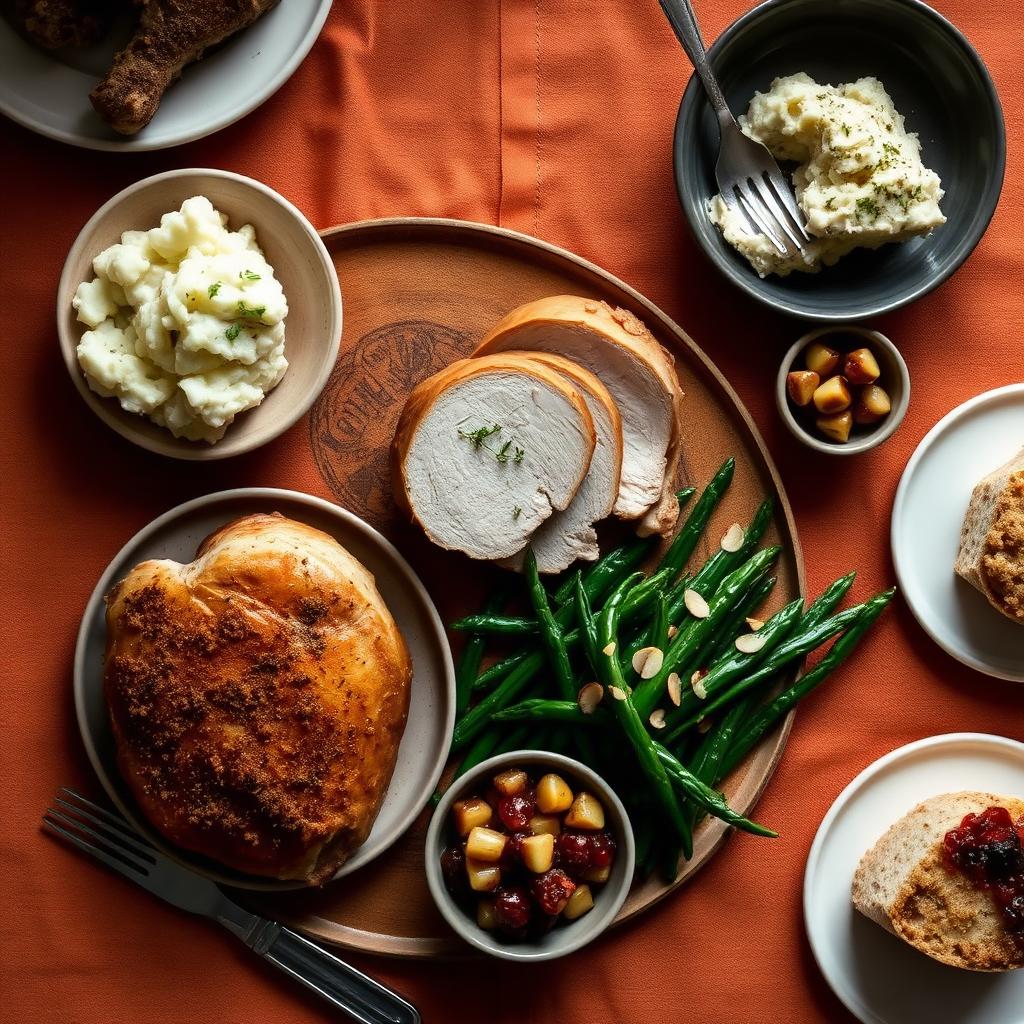
Holiday meals are the single highest-sodium days of the year for most CKD patients. Brined turkey, canned gravy, instant potatoes, boxed stuffing, canned cranberry sauce, and pumpkin pie filling routinely push a single plate past 4,000 mg sodium — more than double the daily limit recommended for stage 3–5 CKD by the 2020 renal nutrition guideline [1]. Add a phosphate-additive load from boxed mixes and processed cheese, plus 2,000+ mg of potassium from potatoes and squash, and the next morning's labs (or weight gain on dialysis) reflect it. The good news: a handful of targeted swaps cut sodium ~60–70% and the additive phosphorus ~80% without anyone at the table noticing.
Sodium math: traditional vs. swapped
The gap between a traditional Thanksgiving plate and a CKD-friendly one is much bigger than most people realize — and it lives almost entirely in the packaged ingredients rather than the food itself. Salt in the cranberry relish, phosphate in the instant potatoes, brine in the turkey: these are the four or five decisions that move the total by thousands of milligrams.
| Dish | Traditional (mg Na) | CKD-friendly swap | Swap (mg Na) |
|---|---|---|---|
| Turkey, 4 oz | 550 (brined) | Fresh, herb-rubbed turkey breast | 75 |
| Gravy, ¼ cup | 350 (canned/packet) | Homemade from drippings + low-Na broth | 90 |
| Mashed potatoes, ½ cup | 380 (instant) | Double-boiled russet + olive oil + garlic | 30 |
| Stuffing, ½ cup | 550 (boxed) | Low-Na bread + apple/celery/sage | 180 |
| Cranberry sauce, ¼ cup | 30 (canned) | Fresh cranberry-orange relish | 5 |
| Green bean casserole, ½ cup | 470 (canned soup base) | Roasted green beans + slivered almonds + lemon | 60 |
| Dinner roll | 230 (commercial) | Homemade no-salt roll or low-Na sourdough slice | 60 |
| Pumpkin pie, slice | 320 | Apple crisp w/ oats and walnuts | 70 |
| TOTAL | ~2,880 | — | ~570 |
Turkey: the single highest-leverage decision
Most supermarket turkeys are pre-injected with a saltwater 'enhancing solution' — read the label for 'contains up to X% solution of water, salt, sodium phosphate.' A 12 lb 'self-basting' or 'pre-brined' turkey can add 1,000+ mg of sodium per 4 oz serving and is a hidden phosphate-additive source. Buy a fresh, un-enhanced (sometimes labeled 'natural' or 'minimally processed') turkey or bone-in breast. Dry-rub it the night before with olive oil, fresh thyme, sage, rosemary, lemon zest, cracked pepper, and a teaspoon of garlic powder. Roast on a rack with the cavity stuffed with halved lemons, onion, and herbs. You will lose nothing on flavor — and the drippings make a far better gravy base than any canned stock.
Day before, evening
Pat the fresh un-enhanced turkey dry. Rub with olive oil, cracked pepper, fresh thyme, sage, rosemary, lemon zest, and garlic powder. No salt. Uncovered in the fridge overnight — this dries the skin for crispness.
Day-of, morning
Take turkey out 45–60 min before roasting. Stuff cavity with halved lemons, quartered onion, and herb sprigs.
Roast
325°F, on a rack, uncovered. About 13 min/lb for unstuffed. Pull at 160°F breast / 175°F thigh.
Rest
Tent loosely with foil, rest 30 min before slicing. This is when the gravy gets made from the drippings.
Sides done right
The sides — not the turkey — are where a Thanksgiving plate quietly accumulates 1,500+ mg of sodium and a large hidden phosphate load. Each of the five staples below has a one-move swap that keeps the flavor and eliminates most of the additives. None of them require a specialty ingredient or an unfamiliar recipe.
Potatoes — double-boil, don't ban
Cube russets into ~½-inch pieces, soak in fresh water for 2 hours, then boil in fresh unsalted water and discard the cooking liquid. Result: ~30–50% less potassium (150–200 mg per ½ cup vs 300–500 mg) [2]. Mash with olive oil, roasted garlic, chives, and unsweetened almond milk — skip the butter and dairy so you save phosphorus budget for elsewhere.
Gravy — make it from scratch
Skim the turkey drippings, deglaze with low-sodium chicken broth, whisk in a flour-and-olive-oil roux (or cornstarch slurry). Finish with cracked pepper, fresh thyme, and a tablespoon of dry sherry or apple cider vinegar. About 90 mg sodium per ¼ cup vs 350+ from a can or packet.
Stuffing — bread is the lever
Boxed stuffing runs 500–700 mg sodium per ½ cup plus a phosphate-additive load. Use a low-sodium bread (Ezekiel sprouted, Aldi's L'oven Fresh low-sodium, or a fresh bakery loaf with no phosphate additives), torn and dried overnight. Sauté celery, onion, and apple in olive oil with sage and thyme — the apple does the flavor-brightening salt usually does.
Cranberry sauce — fresh in 10 minutes
One bag fresh cranberries, ½ cup sugar (or less to taste), ½ cup orange juice, 1 Tbsp orange zest. Simmer 10 minutes until they pop, cool and it gels on its own. No HFCS, no preservatives, essentially zero sodium.
Green beans — skip the casserole
Roast green beans or haricots verts at 425°F for 12 minutes with olive oil, lemon zest, slivered almonds, and cracked pepper. Finishes while the turkey rests. About 60 mg sodium per ½ cup vs 470 mg for the French's-onion classic — and it looks more elegant on the table.
Dessert: trading pumpkin pie for apple crisp
Canned pumpkin pie filling is moderately high in potassium (~250 mg per slice), modestly high in sodium, and the standard recipe uses evaporated milk (concentrated phosphorus). An apple crisp made with peeled, sliced apples (Honeycrisp or Granny Smith), a touch of cinnamon and nutmeg, and a topping of rolled oats, brown sugar, walnuts, and olive oil instead of butter gives you a similar fall flavor at ~70 mg sodium, ~150 mg potassium, and dramatically less added phosphorus per serving. Serve with a small scoop of vanilla sorbet or coconut whipped cream if you want it dressed up.
Plate strategy on the day
| Plate quadrant | What goes there | Approx portion |
|---|---|---|
| Half plate — non-starchy veg | Roasted green beans, side salad with vinaigrette | 1.5–2 cups |
| Quarter plate — protein | Sliced fresh-roasted turkey | 3–4 oz |
| Quarter plate — starch | Double-boiled mashed potatoes OR homemade stuffing (pick one) | 1/2 cup |
| Small condiment | Cranberry relish, homemade gravy | 2 Tbsp each |
| Dessert (later) | Apple crisp, small portion | 1/2 cup |
Drinks, binders, fluid
The drinkable half of the meal is where fluid restrictions and phosphate additives quietly get broken. A cola with dinner adds phosphoric acid (a highly absorbable phosphate additive) plus ~12 oz to your fluid tally. A strong iced tea concentrates oxalate and caffeine. The rules below keep the beverage side of the table in bounds.
On a fluid restriction
Pre-allocate your day so you have room for the meal. Sip rather than gulp, and remember gravy, cranberry sauce, and mashed potatoes all count toward fluid — the plate is wetter than it looks.
On a phosphate binder
First bite of the main plate, not the end of the meal. Half-dose again at second helpings. Keep the bottle on the table where you can see it.
On a diuretic
Take your morning dose on your normal schedule. Skipping or delaying it to 'save room' for the meal is a common reason for post-Thanksgiving edema and next-day weight jumps.
On a fresh CKD diagnosis
You don't have to figure this out mid-meal. Fill half the plate with vegetables, pick one starch, and let the rest of the day be data — not a test you're failing.
Navigating the table without becoming the story
You do not owe anyone a medical explanation of why you didn't take seconds on candied yams. 'I'm pacing myself — I want room for dessert' covers almost every question. If you're hosting, you control the menu and no one knows or cares that the potatoes were double-boiled. If you're a guest, eat the protein you brought yourself (offering to bring the turkey or a vegetable side is the easiest way to guarantee something safe), fill the plate strategically, and skip the foods that historically wreck your labs. One day is one day — what matters is the pattern across the season, not the single plate.
If you're hosting
You control everything. Buy fresh un-enhanced turkey, make sauces from scratch, double-boil the potatoes, and no one at the table will even notice the meal is a CKD-friendly one.
If you're a guest
Offer to bring the turkey or a vegetable side. That single move guarantees at least one dish on the table you can eat freely. Eat the safe items first, sample the rest in small portions.
If you're at a restaurant
Order the plain roast turkey without brine or sauce (many restaurants will oblige if asked ahead), skip the sides, order a plain baked potato without salt, and bring your own binder.
If your labs are already borderline
Halve every portion, skip the roll and dessert, and drink water between courses. The meal is not worth an ED visit — but a smaller version of the meal is fine.
References
- 1.Ikizler TA, et al. KDOQI Clinical Practice Guideline for Nutrition in CKD: 2020 Update. AJKD 2020;76(3 Suppl 1):S1-S107. Read source ↗
- 2.Burrowes JD, Ramer NJ. Removal of potassium from tuberous root vegetables by leaching. J Ren Nutr 2006;16(4):304-11. Read source ↗
- 3.Calvo MS, Uribarri J. Contributions to total phosphorus intake: all sources considered. Semin Dial 2013;26(1):54-61. Read source ↗
- 4.Sherman RA, Mehta O. Phosphorus and potassium content of enhanced meat and poultry products. CJASN 2009;4(8):1370-3. Read source ↗
About the author
Swetha Raju
Columbia M.S. Candidate in Clinical Human Nutrition · AKF Certified Kidney Health Coach · NKF Medical Advisory Committee (MAC) Member · NKF peer mentor · CKD patient advocate · Published chronic disease and nutrition researcher
Swetha Raju is the founder of NephroNourish. As a published researcher and lifelong chronic disease patient, she translates renal nutrition and metabolic science into practical guidance people can actually use.
A note on scope. This article is educational and not individual medical advice. Always discuss changes with your nephrologist, dietitian, or care team.