Food Safety
Cyclospora Outbreaks: Produce Food Safety for CKD, Transplant, and Immunosuppressed Patients
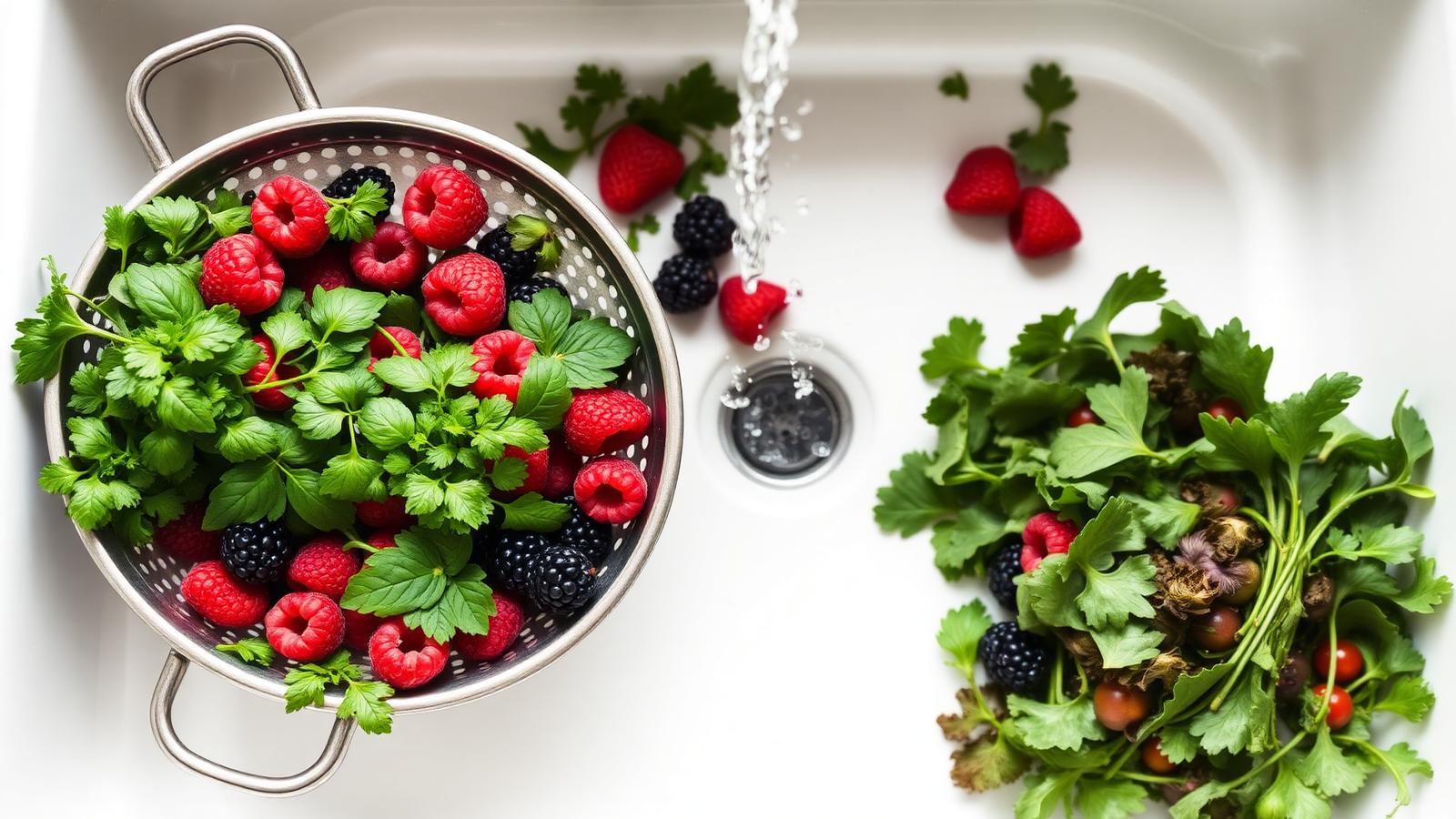
Every summer the same headline comes back: a Cyclospora outbreak traced to bagged salad, fresh basil, or imported berries. The United States now reports thousands of laboratory-confirmed cases in a typical warm season, with cases concentrated between May and August [1]. Most people who get it are otherwise healthy and miserable for a few weeks. If you have kidney disease, a kidney transplant, or take immune-suppressing medication, the calculation is different — and almost nobody writes about that part.
This guide covers what Cyclospora actually is, why the usual food-safety advice does not work on it, which foods keep showing up in outbreak investigations, and a produce routine that lowers your risk without turning you into someone who only eats canned vegetables.
Why this season is different
Cyclospora is not new, and it is not a surprise: U.S. cases have followed the same May-through-August curve for years, and the number of domestically acquired cases has climbed steadily since laboratories started using molecular gastrointestinal panels that detect it [1][3]. What makes this summer stand out is the size and the spread. The 2026 season has produced the highest case counts on record for this point in the year, with clusters reported across a larger number of states than in any prior season, and multiple separate produce investigations running at the same time rather than one dominant outbreak [1][2].
Three things are stacking up. Better testing means more of the cases that always existed are now being found. A hotter, wetter growing season across several major produce regions favors oocyst survival in irrigation water and soil. And the supply chain keeps consolidating: a single processing lot of herbs or salad mix now lands in dozens of states within days, so one contaminated field becomes a multi-state outbreak instead of a local one [2][6].
What Cyclospora actually is
Cyclospora cayetanensis is a single-celled parasite. It spreads when microscopic egg-like packages called oocysts, shed in human stool, contaminate water or soil that later touches fresh produce [4]. Two features make it behave unlike Salmonella or E. coli, and both matter for how you protect yourself.
You can't catch it from a person
Freshly shed oocysts are not infectious. They need days to weeks in the environment to mature. So unlike norovirus, a household member with Cyclospora is not a danger to you — the contaminated food is [5].
Washing doesn't reliably remove it
Oocysts stick tightly to the crinkled surfaces of leafy greens and the hairy surfaces of raspberries and blackberries. Rinsing, scrubbing, and commercial triple-washing all reduce the load but do not reliably eliminate it [4][5].
Sanitizers don't kill it
The chlorine levels used in produce wash water and the vinegar or 'veggie wash' solutions sold for home use do not inactivate Cyclospora oocysts. This is not a case of buying a better spray.
Freezing doesn't fix it
Home freezing is not a reliable kill step. Frozen berries have been linked to outbreaks of related parasites, which is why cooking — not freezing — is the dependable control.
Which foods keep showing up
U.S. outbreak investigations have repeatedly landed on the same short list. Fresh herbs — especially cilantro and basil — and soft berries are the classic vehicles, along with bagged salad and salad mixes, snap peas, and imported leafy produce [1][3][6]. What these have in common is that they are eaten raw, have complex surfaces that trap oocysts, and are often grown in regions with heavy irrigation.
| Food | Why it's higher risk | Lower-risk approach |
|---|---|---|
| Fresh cilantro, basil, parsley | Crinkled leaves trap oocysts; usually added raw at the end | Add herbs to the pan while it's hot, or use dried herbs; blend fresh herbs into a sauce that gets simmered |
| Raspberries, blackberries | Hairy, chambered surfaces hold water and oocysts; washing is ineffective | Cooked compote, baked into oatmeal, or swap to peeled fruit (apple, pear) in peak season |
| Bagged salad and salad mixes | Large batches mix produce from many fields; 'triple washed' is not a kill step | Buy whole heads and use the outer-leaf discard method, or serve wilted/sautéed greens |
| Snap peas, snow peas | Imported, eaten raw, prior outbreaks documented | Blanch 60–90 seconds or stir-fry — still crisp, no longer raw |
| Restaurant salsa, garnishes, salads | Raw cilantro and greens are added by hand after cooking | Ask for salsa cooked/roasted, skip the garnish, choose hot dishes |
| Untreated water, ice abroad | Direct route for oocysts | Sealed bottled water; no ice from unknown sources |
Symptoms: what it feels like and how long
The pattern is distinctive. Symptoms begin roughly a week after the contaminated food — usually about 7 days, sometimes 2 to 14 — which is why people almost never connect it to a specific meal [4]. Then comes watery diarrhea that relapses in waves: a few bad days, a deceptive improvement, then another round. Untreated, this can run 6 weeks or longer, with fatigue, appetite loss, cramping, low-grade fever, and real weight loss [4][5].
Why this hits kidney patients harder
For a healthy adult, weeks of diarrhea are exhausting but survivable. In CKD, transplant, and dialysis, three separate problems stack on top of each other. This is also why kidney guidelines recommend that people on blood-pressure, diuretic, and glucose-lowering medications have an explicit sick-day plan for illnesses that cause vomiting or diarrhea [7].
A produce-safety routine that actually works
Because washing is not a kill step, the effective strategy is choosing and heating, not scrubbing. That said, good handling still lowers overall foodborne risk — Salmonella, Listeria and E. coli all respond to washing and separation even if Cyclospora does not.
Apply heat to the high-risk list
Any dish where the risk food gets steaming hot — sautéed greens, cooked salsa, simmered herb sauces, baked or stewed berries, blanched snap peas — is safe. Heat is the only dependable control.
Track active recalls before you shop
Check the FDA and CDC outbreak pages during summer [1][2]. An active recall on a specific herb, brand, or growing region is a hard 'skip,' not a 'wash it well.'
Buy whole, not pre-cut and bagged
A whole head of lettuce comes from one field; a bagged mix pools many. Discard the outer leaves, wash under running water, and dry with a clean towel or spinner.
Separate and sanitize surfaces
Wash hands 20 seconds before handling produce. Keep raw produce off boards used for raw meat. Clean the sink itself — rinsing produce in a dirty basin adds risk rather than removing it.
Be extra careful while traveling
A substantial share of U.S. cases are either travel-associated or tied to imported produce [4][8]. Abroad, treat raw salads, garnishes, unpeeled fruit, and ice from unknown water as off-limits.
Vinegar soaks
Popular online, ineffective here. Vinegar does not inactivate Cyclospora oocysts and can bruise delicate produce, shortening shelf life.
'Triple washed' labels
A processing description, not a guarantee. Several documented outbreaks involved pre-washed bagged product.
Baking soda scrubs
Useful for removing some pesticide residue from firm produce. No meaningful effect on parasite oocysts on berries or leafy greens.
Anti-diarrhea medication alone
Loperamide may slow symptoms but does not clear the parasite, and masking symptoms delays the diagnosis and the antibiotic that actually works.
If you think you have it
Cyclospora does not respond to the antibiotics used for common bacterial food poisoning. The standard treatment is trimethoprim–sulfamethoxazole (TMP-SMX, sold as Bactrim or Septra) for about a week, longer for people on immunosuppression [4][8]. This matters twice over in kidney disease: TMP-SMX doses are adjusted for kidney function, it can raise serum creatinine and potassium, and combining it with an ACE inhibitor, ARB, or spironolactone has been linked to dangerous hyperkalemia [9]. Sulfa allergy is common, and the alternatives are limited — a conversation, not a self-treatment.
| Situation | Fluids | What to watch |
|---|---|---|
| CKD stage 1–3, not on fluid restriction | Sip oral rehydration solution or diluted broth steadily through the day; plain water alone is not enough during heavy losses | Urine output and color, dizziness on standing, weight dropping more than 2–3 lb in a day |
| CKD stage 4–5, on a fluid limit | Do not free-drink to replace losses. Call your team the same day for a temporary fluid and medication plan | Blood pressure, confusion, muscle cramps, ankle swelling changing quickly |
| On dialysis | Contact the unit before your next session — target weight and potassium bath may need adjusting | Missed dry weight, cramping during dialysis, low blood pressure |
| Kidney transplant | Call transplant coordinator early; diarrhea alters absorption of tacrolimus and MMF | Anti-rejection drug levels, fever, symptoms lasting past 2 weeks |
Renal Nutrition
Hydration in CKD: How Much Water Is Actually Right?
How to set a fluid target by CKD stage — the framework to fall back on during an illness.
Read the article →Renal Nutrition
Summer Hydration on CKD: How Much Water Is Too Much in a Heat Wave
Summer fluid and electrolyte strategy, including which rehydration products are kidney-safe.
Read the article →Renal Nutrition
Potassium and Kidney Disease: Foods to Limit and Foods That Are Actually Safe
Useful when diarrhea and rehydration drinks start shifting your potassium.
Read the article →Kidney-Friendly Recipes
7-Day Kidney-Friendly Meal Plan for Stage 3 CKD (With Grocery List)
A worked week of meals — most of the produce in it is cooked, which is convenient during outbreak season.
Read the article →References
- 1.Centers for Disease Control and Prevention. Domestically acquired cyclosporiasis — annual U.S. case surveillance and outbreak summaries. Read source ↗
- 2.U.S. Food and Drug Administration. Outbreaks of foodborne illness — current investigations. Read source ↗
- 3.Casillas SM, et al. Cyclosporiasis surveillance — United States. MMWR Surveill Summ 2018;67(5):1–13. Read source ↗
- 4.Centers for Disease Control and Prevention. Cyclosporiasis — clinical overview, transmission, diagnosis and treatment. Read source ↗
- 5.Ortega YR, Sanchez R. Update on Cyclospora cayetanensis, a food-borne and waterborne parasite. Clin Microbiol Rev. 2010;23(1):218–234. Read source ↗
- 6.Hadjilouka A, Tsaltas D. Cyclospora cayetanensis — major outbreaks from ready-to-eat fresh fruits and vegetables. Foods. 2020;9(11):1703. Read source ↗
- 7.KDIGO 2024 Clinical Practice Guideline for the Evaluation and Management of Chronic Kidney Disease (sick-day medication guidance). Read source ↗
- 8.Almeria S, Cinar HN, Dubey JP. Cyclospora cayetanensis and cyclosporiasis: an update. Microorganisms. 2019;7(9):317. Read source ↗
- 9.Fralick M, et al. Co-trimoxazole and sudden death in patients receiving inhibitors of renin–angiotensin system: population based study. BMJ. 2014;349:g6196. Read source ↗
- 10.World Health Organization / UNICEF. Oral rehydration salts: production of the new ORS — composition and clinical use. Read source ↗
About the author
Swetha Raju
Columbia M.S. Candidate in Clinical Human Nutrition · AKF Certified Kidney Health Coach · NKF Medical Advisory Committee (MAC) Member · NKF peer mentor · CKD patient advocate · Published chronic disease and nutrition researcher
Swetha Raju is the founder of NephroNourish. As a published researcher and lifelong chronic disease patient, she translates renal nutrition and metabolic science into practical guidance people can actually use.
A note on scope. This article is educational and not individual medical advice. Always discuss changes with your nephrologist, dietitian, or care team.